You’ve got thinning hair, you don’t want to shave your head, and you’re wondering whether SMP can genuinely add the appearance of density rather than just a buzzcut silhouette. That’s a different question from standard scalp micropigmentation, and it deserves a specific answer. The five techniques below are what actually move the needle on density, so you can walk into a consultation knowing exactly what to ask.
1. Stippling: the foundation of every density treatment
Stippling is the baseline of advanced micropigmentation methods for density work. A fine needle deposits individual pigment dots that mimic the cross-sectional look of a hair follicle at skin level. Done well, each dot sits flush in the dermis: round, crisp, and the right diameter for your follicle size.
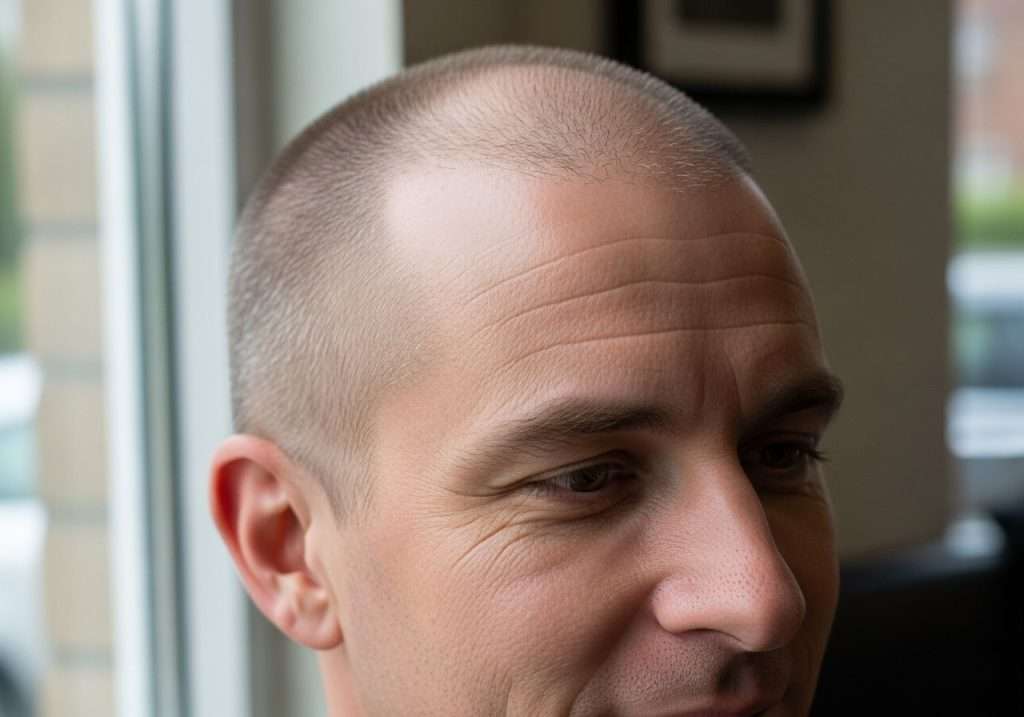
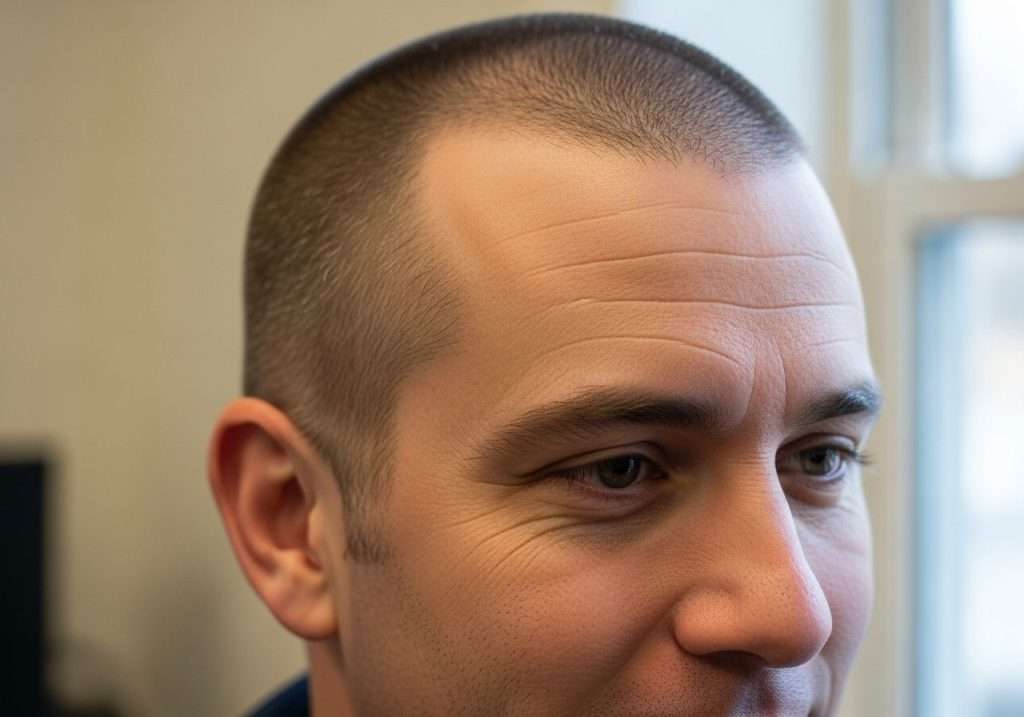
For men with moderate thinning across the crown or vertex, stippling alone can produce a convincing thickening effect without altering the natural hairline. The key variable is dot spacing. Too close and the result reads as a solid block of colour; too far apart and the density impression collapses under certain lighting. As a barber of 15 years, I set spacing based on the density of your surviving hair, matching the pigment pattern to what’s already there.
2. Pointillism layering: building depth across multiple sessions
Pointillism as a density tattoo technique takes stippling further by applying dots at slightly varied depths and angles across two or three sessions. The first session lays a lighter base; subsequent sessions intensify specific zones, typically where natural hair is finest or most sparse.
This graduated approach is particularly effective for diffuse thinning, where hair hasn’t receded in a defined pattern but has simply become less dense everywhere. Because each layer settles and softens before the next is added, the final result has a three-dimensional quality that a single heavy session can’t replicate. It’s slower, but the realism is noticeably better.
3. Feathered edge blending: where existing hair meets treated scalp
One of the most technically demanding parts of male density SMP is the transition zone: the area where your remaining hair meets a section of thinning scalp. A hard boundary between pigmented skin and natural hair reads as artificial immediately.
Feathered edge blending involves gradually reducing dot density as you move outward from the thinning area, so the pigment fades into the surrounding hair rather than stopping at a visible line. I use a progressively lighter hand and wider dot spacing over roughly one to two centimetres of transitional scalp. Done correctly, the eye can’t locate where the SMP ends and the natural hair begins.
4. Colour matching for grey and mixed-tone hair
Men with salt-and-pepper hair or naturally lighter follicles face a specific challenge: a single pigment shade will look noticeably darker than their existing hair, defeating the purpose of a natural density result. This is where advanced micropigmentation methods require genuine colour knowledge.
I mix custom pigment ratios to sit within the range of tones already present in your hair. For grey or predominantly white hair, the target shade is typically a light-to-mid grey rather than black or dark brown. Applying a darker pigment to a lighter hair base creates contrast that draws attention exactly where you don’t want it. Getting the tone right matters as much as technique.
5. Scalp texture mapping: working with your skin, not against it
Scalp skin isn’t uniform. Pore size, sebum production, and prior sun exposure all affect how pigment settles and how long it holds. A technique that works beautifully on one skin type can migrate, blur, or fade unevenly on another.
Before any density treatment, I assess your scalp texture directly: how oily the skin is, whether there’s any scarring or follicular damage, and how the existing pores align. On finer-pored skin, dots can be placed more precisely and closely. On larger-pored or more textured skin, I adjust needle depth and dot size to prevent pigment spreading beyond the intended point. This mapping step is what separates a genuinely tailored density result from a one-size treatment.
The technique that suits you depends on how your hair is thinning, what you have left, and what you want the finished result to look like. A thorough consultation should address all three before any pigment touches your scalp.
Frequently Asked Questions
What is the best SMP density technique for men who still have hair?
For men retaining natural hair, a combination of pointillism layering and feathered edge blending typically produces the most realistic density result. The pigment is placed to complement existing follicles rather than replace them, creating an impression of fullness that holds up in different lighting conditions and at normal social distances.
How many sessions does a male density SMP treatment usually require?
Most male density treatments require two to three sessions. The first session establishes a base layer; subsequent sessions refine depth, tone, and specific thinning zones. Spacing sessions two to four weeks apart allows the skin to heal and the pigment to settle, giving a clearer picture of what additional work is needed before the final session.
Will SMP density treatment look natural on salt-and-pepper hair?
Yes, provided the pigment is mixed to match the cooler, lighter tones in your hair rather than defaulting to a dark shade. Using a custom grey-toned pigment blend ensures the SMP dots sit within the natural colour range of your existing follicles, so the treated areas blend rather than contrast with your surrounding hair.
How is density SMP different from a standard hairline SMP treatment?
Standard SMP typically recreates the appearance of a shaved head or defines a receding hairline. Density SMP works within existing hair to create the impression of fuller coverage for men who still have hair they want to keep. The technique requires finer dot placement, careful tone matching, and blending with surrounding natural hair rather than creating a defined border.
Does scalp skin type affect which density tattoo technique is used?
Scalp texture significantly influences technique selection. Oilier or larger-pored skin requires adjusted needle depth and dot sizing to prevent pigment spreading. Finer-pored skin allows more precise, closely spaced dots. A practitioner should assess your scalp directly before selecting an approach, as applying the same technique regardless of skin type produces inconsistent long-term results.