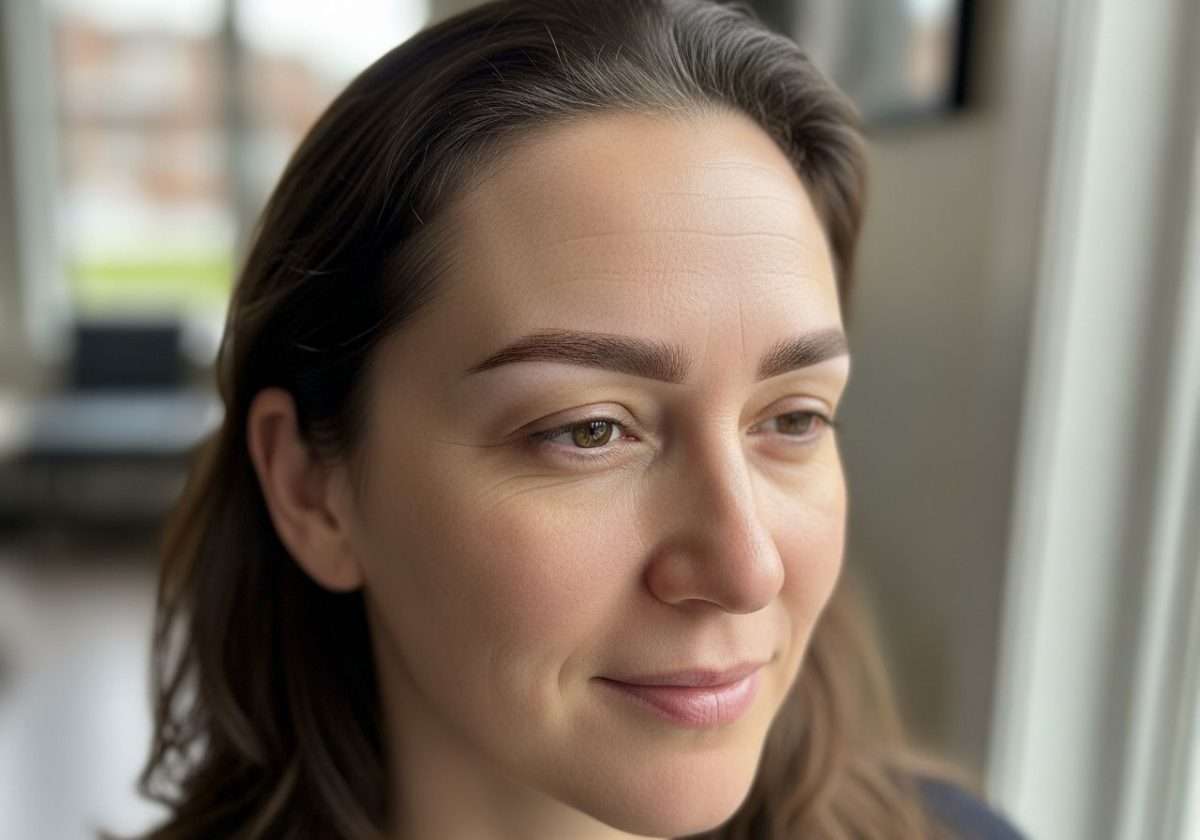
You still have hair, but you can see more scalp than you used to. The parting looks wider, the crown looks sparse, and no amount of dry shampoo quite disguises it. This article explains exactly what scalp micropigmentation can and cannot do for women with diffuse thinning or pattern hair loss, and what the healed result genuinely looks like across different hair densities.
Why female hair loss responds differently to SMP than male baldness
Female pattern hair loss affects one in three women. Unlike male pattern baldness, which tends to recede from the temples and crown in predictable stages, female thinning is usually diffuse: the hair becomes finer and less dense across a wide area, rarely progressing to total baldness, and the frontal hairline typically remains intact.
That distinction matters for technique. In male applications, SMP is often used to replicate the look of a shaved head, working into areas with little or no existing hair. For women, the goal is almost always density enhancement: placing pigment dots between existing strands so the scalp is less visible through the hair. The practitioner works with your hair, not around the absence of it.
The pigment dots are deposited at a depth of 1.5 to 2 millimetres into the dermis, replicating the visual impression of individual follicles. Because your existing hair provides natural coverage above those dots, the result blends seamlessly rather than creating a defined cropped hairline. The effect is one of closer hair density at the scalp level rather than a sharp outline.
Who is and is not a candidate for female SMP
The strongest candidates are women with androgenetic alopecia, alopecia areata, post-chemotherapy thinning, and scarring alopecias including traction alopecia from prolonged tight styling. SMP is also used effectively to camouflage scalp scars from previous hair transplant procedures.
Women with diffuse thinning tend to see particularly reliable results because the remaining hair fibres provide a natural frame for pigment placement. The contrast between scalp and hair, the visible gap that makes thinning obvious, is reduced session by session, with pigment dot density building from around 40 dots per square centimetre in the first session to 80 to 100 dots per square centimetre by the final one.
Not everyone is a candidate. Active scalp conditions including psoriasis flare-ups, eczema, and widespread acne require the skin to be settled before treatment begins. Keloid-prone skin carries a higher risk of adverse pigment response and needs careful assessment beforehand. Pregnancy is a standard contraindication. If you are managing an autoimmune condition such as alopecia areata, it is worth understanding that SMP camouflages existing hair loss but does not affect the underlying mechanism driving it.
What the procedure involves across multiple sessions
Most women require two to four sessions, each lasting between one and five hours depending on the area being treated. Sessions are spaced several weeks apart to allow the initial pigment to settle and the practitioner to assess how your skin has retained colour before building the next layer.
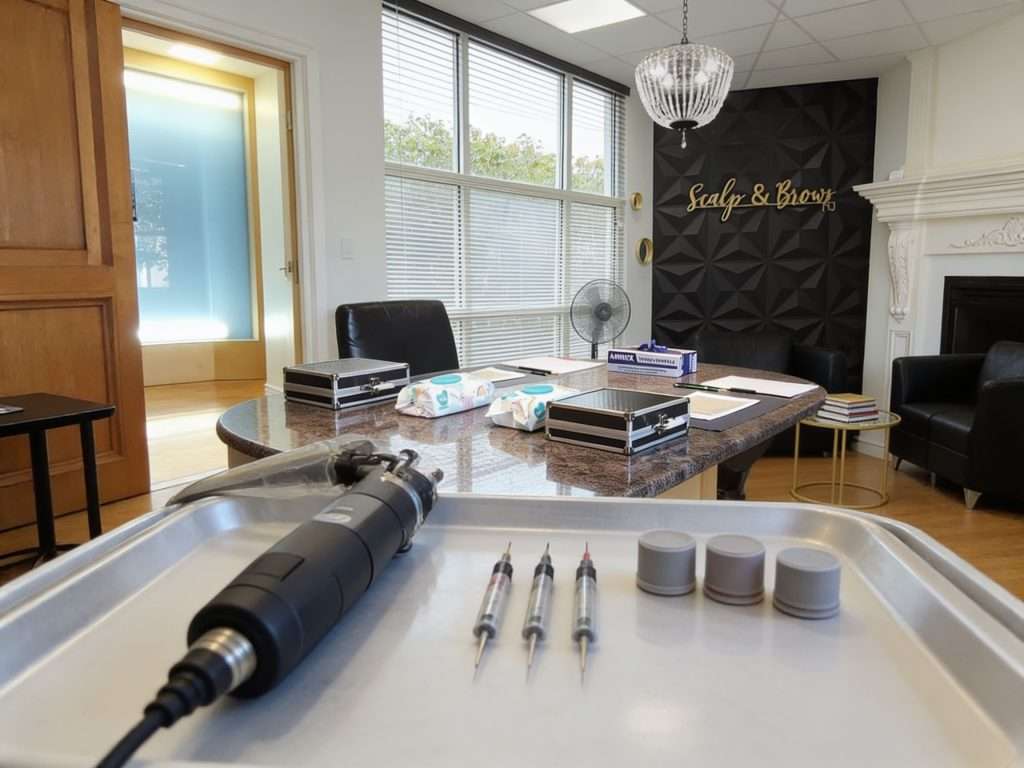
Needle selection varies by zone. A fine 0.2 mm single-point needle is used along any hairline border work, while a 0.25 mm triple-point needle covers the vertex, temporal, and occipital regions. For women, who typically retain their frontal hairline, the most work usually concentrates on the crown and mid-scalp, where thinning is most visible to others and most obvious in photographs.
The healing timeline runs to approximately 30 days after your final session. In the first four days, avoid water on the scalp, shampoo, sweating, and shaving. Between days five and ten, gentle washing resumes but direct sun exposure should be avoided. From day ten onwards, applying SPF 30 to 50 on the scalp becomes a daily habit that actively protects your result. Swimming pools should be avoided for 28 days after the final session. Initial redness settles within two to three days for most people.
How long results last and what affects their longevity
Results typically last between three and eight years before a touch-up is needed. The range reflects real variables: skin type, sun exposure, lifestyle, and the specific area treated. A 2025 case series reported immediate post-treatment visual density scores averaging 8.7 out of 10, declining modestly to 7.7 at six months, with scarring alopecias showing faster fading than androgenetic cases.
Pigment fades because of natural epidermal turnover, UV exposure, and immune activity in the skin. Oily skin and faster cellular metabolism accelerate fading; dry skin and consistent SPF use slow it. In practice, most clients return for a maintenance session every three to four years rather than waiting until the result has noticeably diminished.
Cost varies considerably depending on the area of coverage and the practitioner’s location and experience, typically ranging from $400 to $5,000 across the full course of sessions. Pricing is usually structured by session count, and touch-up appointments are a separate future cost to factor in. Medical insurance does not cover the procedure.
The result is most convincing when the approach is conservative: building density gradually, matching pigment tone precisely to your existing hair colour at scalp level, and never overworking an area in a single session. The difference between a natural result and one that reads as artificial almost always comes down to those decisions.
Frequently Asked Questions
Can scalp micropigmentation help women who still have most of their hair?
Yes. SMP for thinning hair in women is specifically designed to work alongside existing hair rather than replace it. Pigment is placed between your natural strands to reduce scalp visibility, making the hair appear denser. Women with early to moderate diffuse thinning often see the most seamless results because their hair provides natural coverage over the pigment dots.
Will the pigment dots be visible through my existing hair?
When placed correctly, the dots are not individually visible through the hair. They sit at scalp level beneath your strands and are matched in tone to your natural hair colour, so what the eye perceives is increased density rather than individual marks. Shallow or poorly matched pigment placement is the most common reason for an unnatural result, which is why practitioner experience is critical.
How is female SMP different from the shaved-head look associated with male SMP?
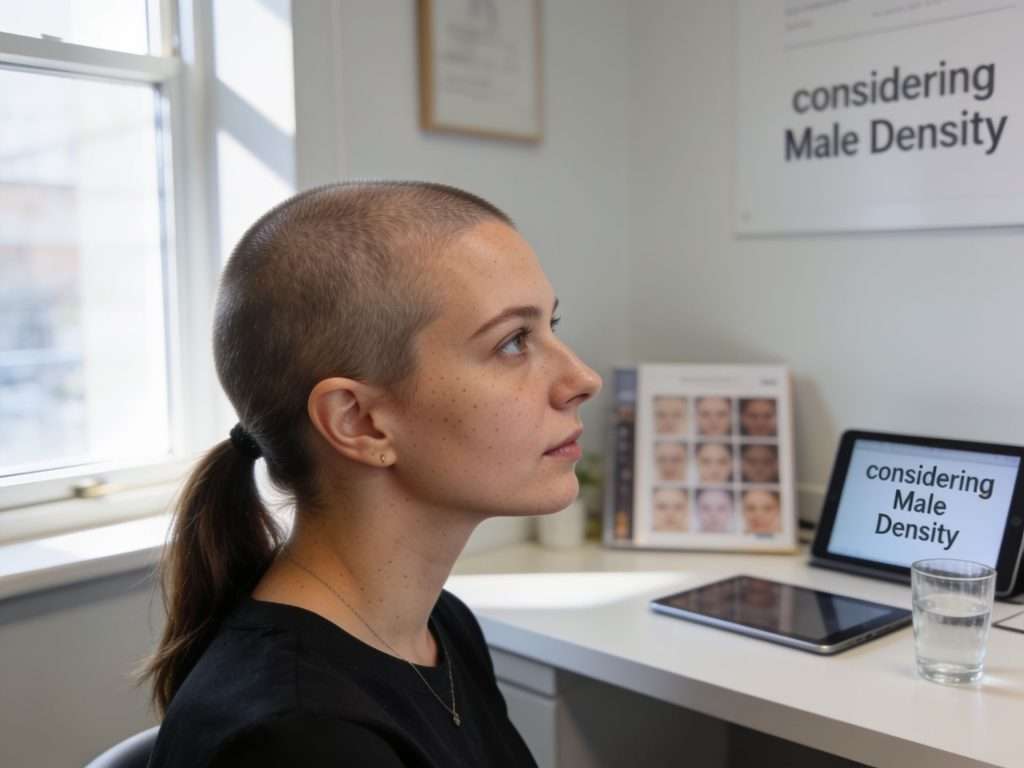
Male SMP often replicates the appearance of a shaved scalp across areas with little existing hair, using a defined hairline as a visual border. Female SMP almost universally focuses on density enhancement within existing hair rather than creating a hairline effect. The technique, needle selection, and pigment placement strategy are all adapted to work with retained hair rather than to simulate its absence.
Does scalp micropigmentation work for alopecia areata in women?
SMP can camouflage the patchy hair loss caused by alopecia areata by filling visible gaps with pigment dots that match the surrounding follicle density. It does not treat the autoimmune condition causing the loss. Results in scarring and autoimmune alopecias tend to fade slightly faster than in androgenetic cases, so touch-up frequency may be higher. A full assessment of your scalp condition is essential before treatment begins.
What are the main risks of scalp micropigmentation for women?
Reported complications include infection from unsterilised equipment, allergic reactions to pigments, pigment migration from incorrect needle depth, and colour shifts to blue or grey tones over time. Keloid-prone skin requires careful pre-treatment assessment. Choosing a practitioner with verifiable certification, bloodborne pathogen training, and substantial documented experience is the most effective way to reduce these risks significantly.