You’ve got fresh brows and one question matters now: what protects the result, and what can ruin it? Microblading aftercare means keeping your brows clean, dry, untouched, and protected for 7 to 14 days so the pigment heals evenly. This guide breaks down what to do, what to avoid, and what each healing stage usually looks like.
Because microblading uses a handheld blade rather than a machine, the skin often needs stricter care than people expect, especially in the first week. Fresh strokes are tiny controlled cuts in the upper skin layers, so sweat, water, friction, acids, and picking can all lead to patchy retention or blurred strokes.
If you have oily skin, aftercare matters even more. Oily skin can soften scabs too quickly and may cause hair like strokes to fade faster, which is one reason some people are better suited to nano brows or other machine techniques.
What to do in the first 14 days
The first rule in most microblading care instructions is dryness. For roughly 7 to 10 days, and sometimes the full 14, keep your brows out of direct water spray in the shower, avoid soaking them, and do not let cleanser, shampoo, or conditioner sit on the area.
Clean them only as advised after treatment. That usually means a very gentle cleanse with sterile water or a practitioner approved wipe, followed by a rice grain amount of aftercare balm if one has been specifically recommended. More product is not better. A thick layer can over soften the skin.
Here is the basic routine most people can follow safely:
- Wash hands before going anywhere near your brows.
- Blot away lymph fluid in the first day only if advised.
- Apply only the recommended aftercare product, sparingly.
- Sleep on your back if you can, especially for the first 3 to 5 nights.
- Keep hair, hats, and pillow friction off the brow area.
Do not pick flakes or scabs. This is the instruction clients break most often, and it is the one most likely to leave gaps. Flaking is normal. Pulling at it lifts pigment before it has had a chance to settle.
Also skip makeup on or around the brows until the skin surface has healed. That usually means no brow pencil, no concealer over the area, and no active skincare such as retinol, glycolic acid, salicylic acid, or vitamin C close to the brows.
What to avoid if you want the strokes to stay crisp
If you want to know how to care for microblading properly, think heat, moisture, friction, and bacteria. Those are the four things most likely to interfere with healing. For at least 7 to 14 days, avoid gyms, running, hot yoga, saunas, steam rooms, swimming pools, hot tubs, and long hot showers.
Sweat is a bigger problem than most people think. It carries salt onto healing skin, softens scabs, and can push pigment out before it settles. A hard workout on day 3 can do more damage than missing one aftercare application.
Sun is another common mistake. Freshly treated skin should not be exposed to strong UV while healing. Once healed, daily SPF around the brow area helps slow fading, though sunscreen should not be applied directly onto unhealed skin.
You should also avoid facials, brow tinting, lamination, waxing, threading, and chemical peels until the area is fully healed. If you have a holiday, a beach break, or an event with heavy makeup booked within two weeks, timing your appointment matters more than most people realise.
One point that often gets overlooked is that microblading is not the same as nano brows. Nano brows use a digital device, not a handheld blade, and often create less visible scabbing. If your skin is oily or reactive, aftercare can feel harder with microblading because the skin trauma is often slightly greater.
What the healing timeline usually looks like
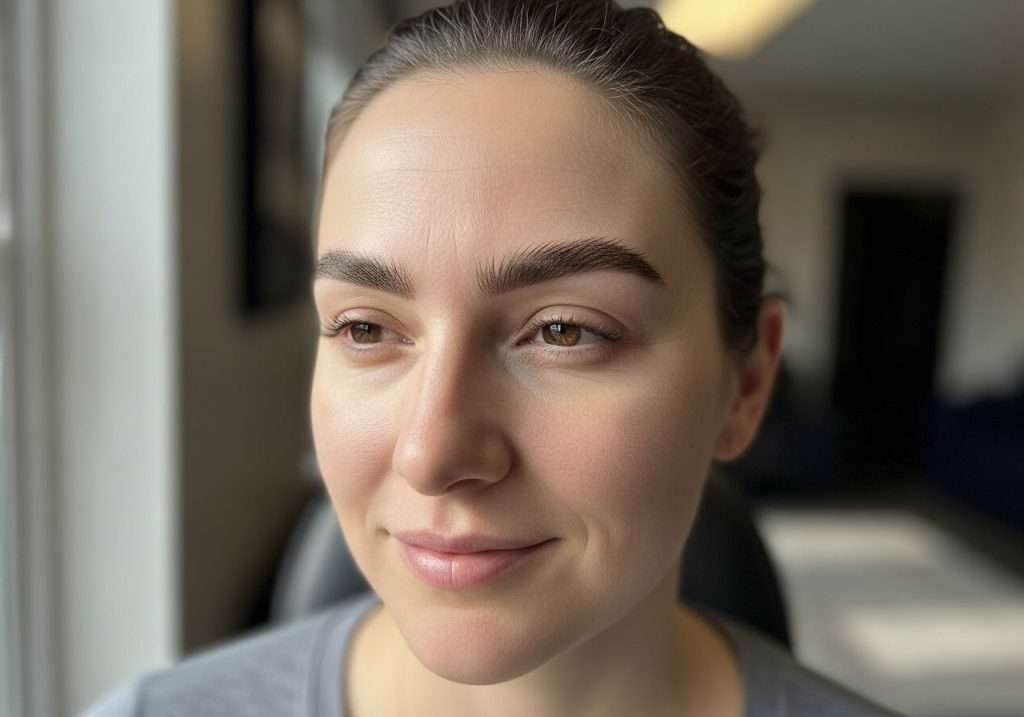
Days 1 to 2 are the bold phase. Brows usually look darker, sharper, and slightly thicker than the healed result. Mild redness and tenderness are common on the first day.
Days 3 to 7 are the flaky phase. The area can feel tight, dry, and itchy. This is where most panic starts, because the brows may look too dark in one patch and too light in another. That uneven look is normal while surface healing is happening.
Days 7 to 14 often bring the ghosting phase. Some of the pigment can seem to disappear as fresh skin forms over the strokes. Many people think the treatment has failed at this point. Usually it has not. The colour often returns gradually over the following weeks.
Weeks 4 to 8 are when the true result becomes clearer. This is why touch ups are usually booked after the brows have had time to settle. A touch up is not a sign something went wrong. It is a standard part of building shape, colour, and retention.
Normal healing signs include light scabbing, flaking, temporary itchiness, and uneven colour during the first couple of weeks. Red flags are different. Spreading redness, heat, swelling that worsens, pus, or severe pain should not be brushed off as routine healing.
Which products are sensible and which ones cause problems
The safest aftercare products are usually the simplest ones. Most microblading care instructions rely on either no ointment at all after the first day, or a very light layer of a practitioner approved balm used sparingly. Thick occlusive products can suffocate the area and loosen scabs too early.
A gentle, fragrance free cleanser can be useful once cleansing is advised, but exfoliants are off limits until healing is complete. That means no scrubs, no cleansing brushes, and no acid toners around the brows. Skincare migration counts, so if you apply retinol to the forehead, keep it well away from the treated area.
If you wear foundation daily, expect to change your routine briefly. It is better to have bare skin around the brows for a week than to risk infection or poor pigment retention. The same logic applies to fake tan, tinted moisturiser, and facial oils.
Long term, healed brows last better when you minimise sun exposure, avoid frequent acid peels over the brow area, and do not over treat the skin with aggressive anti ageing products. If you are repeatedly losing strokes early, it is worth reassessing skin type, skincare habits, and whether a different brow technique would suit you better.
The clearest decision rule is this: if an activity adds water, sweat, heat, rubbing, or product build up to healing brows, it probably belongs on the no list for now. Follow that rule, and microblading aftercare becomes much easier to judge day by day.
Frequently Asked Questions
How long do I need to follow microblading aftercare?
Most people need to follow strict microblading aftercare for 7 to 14 days, with full colour settling over 4 to 8 weeks. The surface may look healed sooner, but the skin is still recovering underneath. Keep following aftercare instructions until flaking has finished and the area feels completely normal.
Can I wash my face after microblading?
Yes, but you need to wash your face carefully after microblading. Keep direct water pressure, cleanser, shampoo, and hot steam away from the brows during early healing. Clean around the area and only cleanse the brows exactly as advised in your microblading care instructions, using a very gentle method.
What should I avoid after a microblading appointment?
After a microblading appointment, avoid sweating, swimming, saunas, steam rooms, sun exposure, makeup on the brows, skincare acids, retinol, and picking scabs. Anything that adds moisture, heat, friction, or bacteria can affect healing. Those restrictions usually matter most during the first 7 to 14 days.
Is scabbing normal during the healing process?
Yes, light scabbing or flaking is normal after microblading because the treatment creates tiny cuts in the upper skin layers. The key is to leave the flakes alone. Picking them off too early can remove pigment and leave gaps, even if the brows looked fine the day before.
Why do my brows look lighter after a week?
Brows often look lighter after about a week because healing skin temporarily sits over the pigment. This stage is commonly called ghosting and it is a normal part of how to care for microblading without panicking. The colour often reappears gradually over the next few weeks before the touch up.