You’re not asking whether SMP works. You’re asking whether it will look natural on dark hair, or leave you with a flat, obvious result that stands out for the wrong reasons. SMP density on dark hair can look entirely convincing, but only when the treatment is built around contrast, pigment depth and controlled layering rather than simply adding darker dots. Here’s what makes the difference, and what usually makes it go wrong.
Dark hair changes the rules for density
Dark hair creates stronger contrast against the scalp. That sounds useful, but it also means every dot carries more visual weight. On a man with thinning dark brown or black hair, scalp micropigmentation has to mimic soft shadow, not stamp colour into every visible gap.
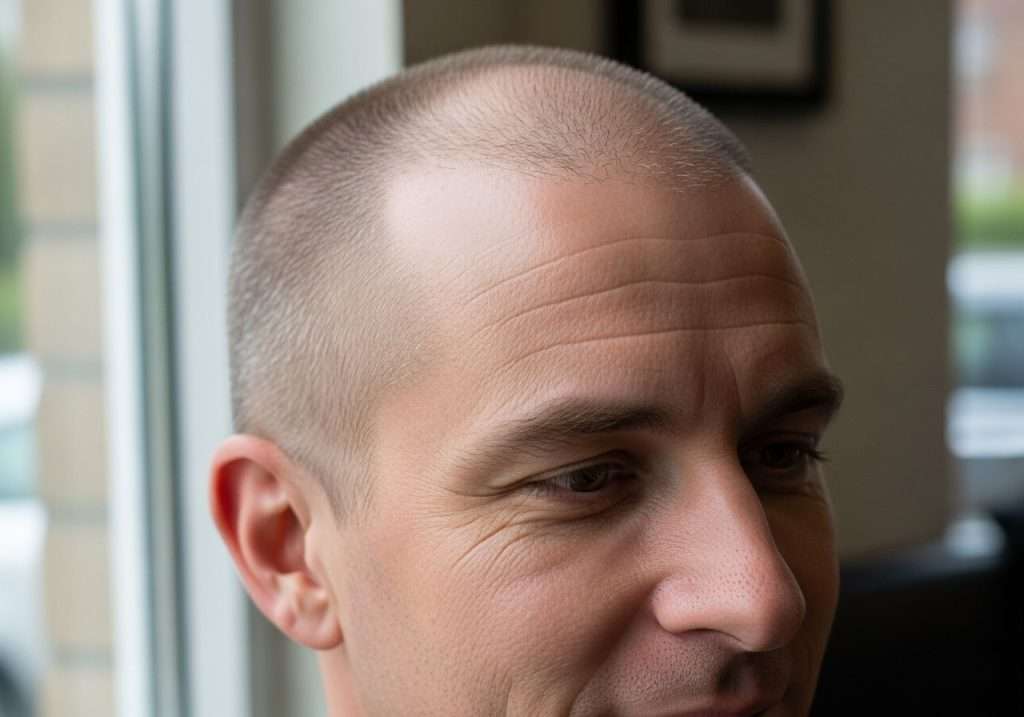
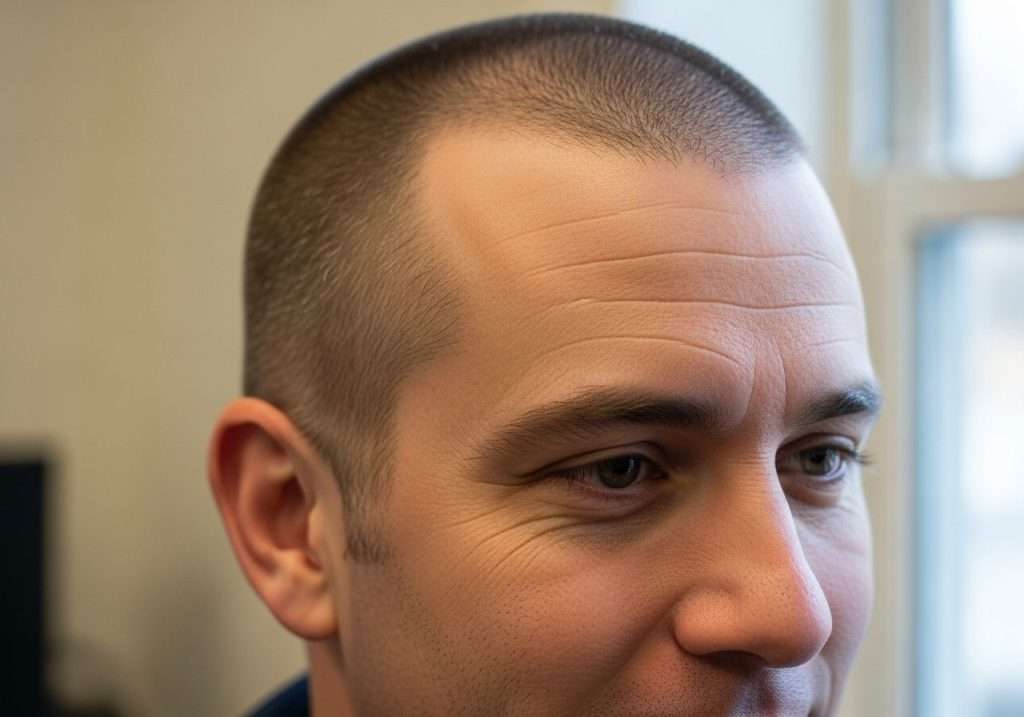
This is why male density is a different conversation from a shaved-head SMP result. With existing hair on top, the goal is to reduce scalp shine and make thinning areas read as fuller from normal speaking distance, roughly one to two metres. If the pigment is too bold, the scalp can start to look blocky or helmet-like under daylight.
Black hair scalp micropigmentation often needs more restraint, not more darkness. The darker the surrounding hair, the easier it is to create an unnatural wall of contrast if the treatment is packed too tightly. A believable result usually comes from layering lighter visual texture across multiple sessions so the eye reads density, not ink.
The same applies to a dark hair density treatment at the crown. Crowns catch overhead light and expose spacing quickly. If the pattern is too solid, the crown can look flat even when the front and mid-scalp seem acceptable indoors.
Pigment depth matters more than most men realise
Depth is one of the biggest reasons SMP either settles naturally or turns stubborn and obvious. If pigment is placed too deep, dots can spread slightly as they heal. On dark hair, that softness does not read as natural stubble. It reads as blur.
For density work, dots need to sit at the right level to heal crisp enough to imitate follicle shadow without becoming sharp little specks. Too shallow and retention can be patchy. Too deep and the result can drift darker, cooler and larger than intended over time.
This is especially important with black hair scalp micropigmentation because the treatment is already working next to a deep hair colour. You don’t need oversized impressions to make an impact. You need tiny, consistent marks that disappear into the visual noise of real hair.
A considered dark hair density treatment also respects the scalp’s surface. Oily skin, scar tissue and sun exposure can all affect how pigment settles. That is one reason treatment is typically spread across two to four sessions, giving room to judge healed colour before adding more.
Natural density comes from balance, not darkness
The mistake men fear most is looking like they’ve had a hair tattoo. That usually happens when the treatment chases instant darkness instead of believable balance. Natural-looking SMP doesn’t try to colour in the scalp. It creates the impression that there is simply less scalp visible between hairs.
Three things control that balance:
- Dot size: smaller impressions usually suit male density because they blend into existing follicles
- Spacing: tighter is not always better, especially through the frontal third where harshness shows first
- Tone choice: dark hair does not mean jet-black pigment should dominate the scalp
For SMP density on dark hair, a softer build is usually the safer route. The first session often looks deliberately modest. That’s not under-treatment. It’s a test of how your scalp heals, how much contrast remains once redness fades, and how much more density is actually needed.
Other options sometimes enter the conversation here. Hair fibres can camouflage a mild thin spot for a day. Medical therapy may help stabilise loss. A hair transplant can add real follicles in selected areas. SMP fits differently: it changes the appearance of density without requiring a shaved style.
If your hair is dark and straight, the treatment may need even more caution at the hairline and temples. Straight dark hair tends to reveal edges faster than softer, curlier patterns. That doesn’t mean density SMP is a poor choice. It means the treatment should follow your natural hairline logic rather than redraw it aggressively.
How to tell whether a result will look too harsh
Most bad outcomes are predictable before the first session finishes. If the scalp already looks heavily shaded while the skin is still red, that’s usually a warning sign. Healed male density should soften into the background, not announce itself across the room.
A simple decision rule helps. If the treatment still reads as separate pigment marks rather than a gentle reduction in scalp contrast after healing, it’s too strong for density work. The eye should notice fuller-looking hair, not obvious scalp work.
Photos can mislead here. Clinic images are often taken under controlled light, with hair styled and angles chosen carefully. What matters more is how SMP behaves in daylight, under bathroom lighting and from above. Dark hair exposes mistakes in all three settings.
Another clue is whether the density matches the rest of your pattern. Men thinning through the crown, mid-scalp and front rarely suit the same treatment strength everywhere. Crowns usually need a softer, more diffused approach. Frontal zones need precision. Mid-scalp often carries the blend. Uniform darkness across all three areas can look false very quickly.
That’s why SMP density work on dark hair should be judged as a system, not a patch fix. The right result respects existing hair calibre, the percentage of miniaturised hairs, scalp colour and how you actually wear your hair day to day. If you prefer a short textured style rather than a shaved head, the treatment has to support that reality.
Dark-haired men consistently get the most natural SMP results when the treatment adds soft optical density in stages, stays conservative with depth and tone, and never tries to overpower the scalp in a single session. If the result makes your thinning look quieter rather than painted over, the strategy is doing its job.
Frequently Asked Questions
Does SMP look darker on black hair than on brown hair?
Yes, black hair scalp micropigmentation usually reads stronger because the contrast between hair and scalp is naturally higher. That doesn’t mean the result has to look harsh. It means dot size, spacing and pigment depth need tighter control so the added density blends into existing hair instead of creating a solid block.
Is male density SMP different from a shaved head treatment?
Yes, male density SMP is different because it works through existing thinning hair rather than imitating a fully shaved scalp. The aim is to reduce visible scalp and create the impression of fuller hair. That usually calls for softer layering, more spacing control and a more cautious approach to contrast throughout.
How many sessions does dark hair density treatment usually need?
A dark hair density treatment typically takes two to four sessions, depending on how much scalp show-through you have and how your skin retains pigment. Darker hair often benefits from gradual layering because it is easier to add density later than to correct a result that has healed too bold.
Can SMP for dark hair look like a hair tattoo?
Yes, SMP for dark hair can resemble a hair tattoo if the pigment is too deep, the dots are too large, or the treatment is packed too densely in one session. Natural density should read as softer shadow between hairs. If people notice pigment before they notice fuller-looking hair, the treatment is too strong.
Who is a good candidate for SMP density on dark hair?
A good candidate for SMP density on dark hair is a man with thinning hair who wants the look of more fullness without shaving his head. It suits men with diffuse thinning, visible scalp at the crown or mid-scalp, or reduced density after a transplant, provided realistic contrast expectations are maintained.