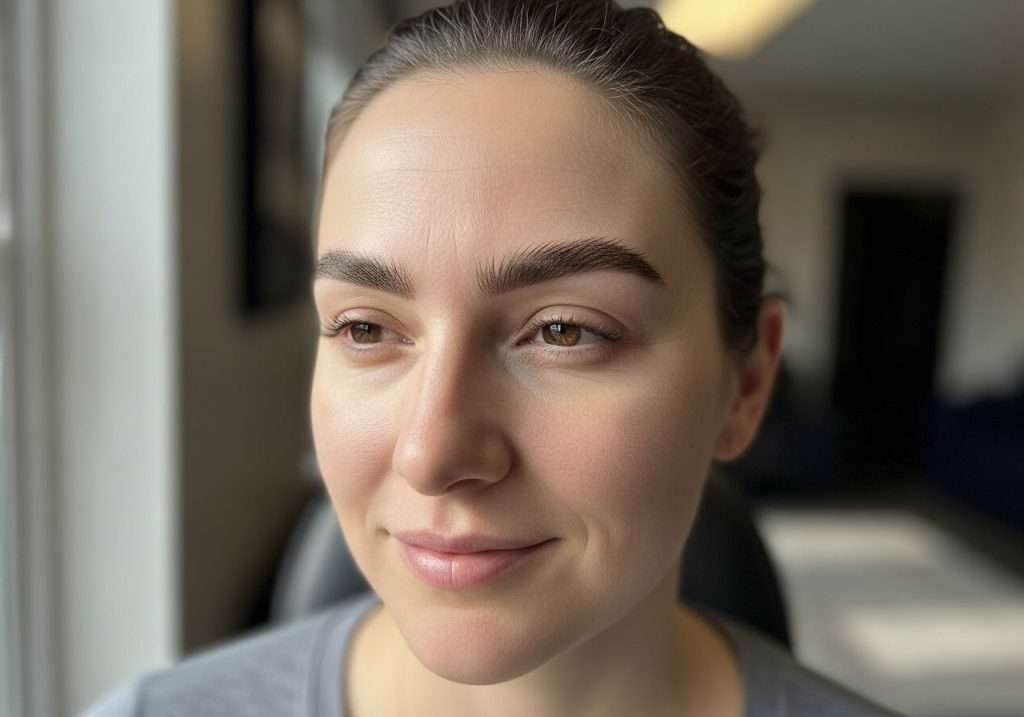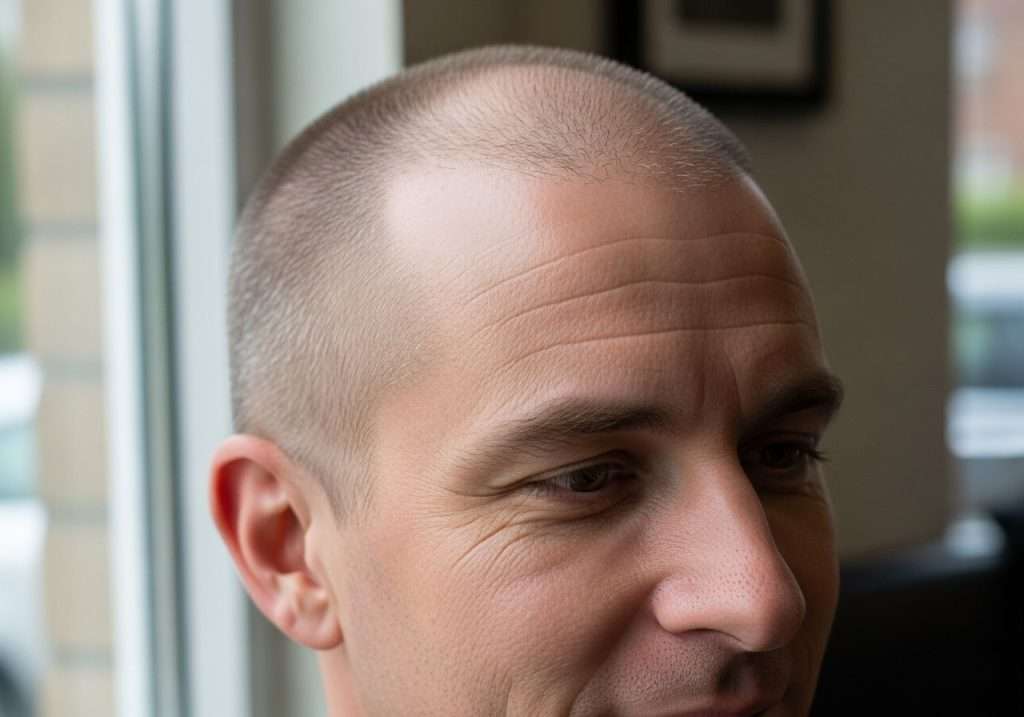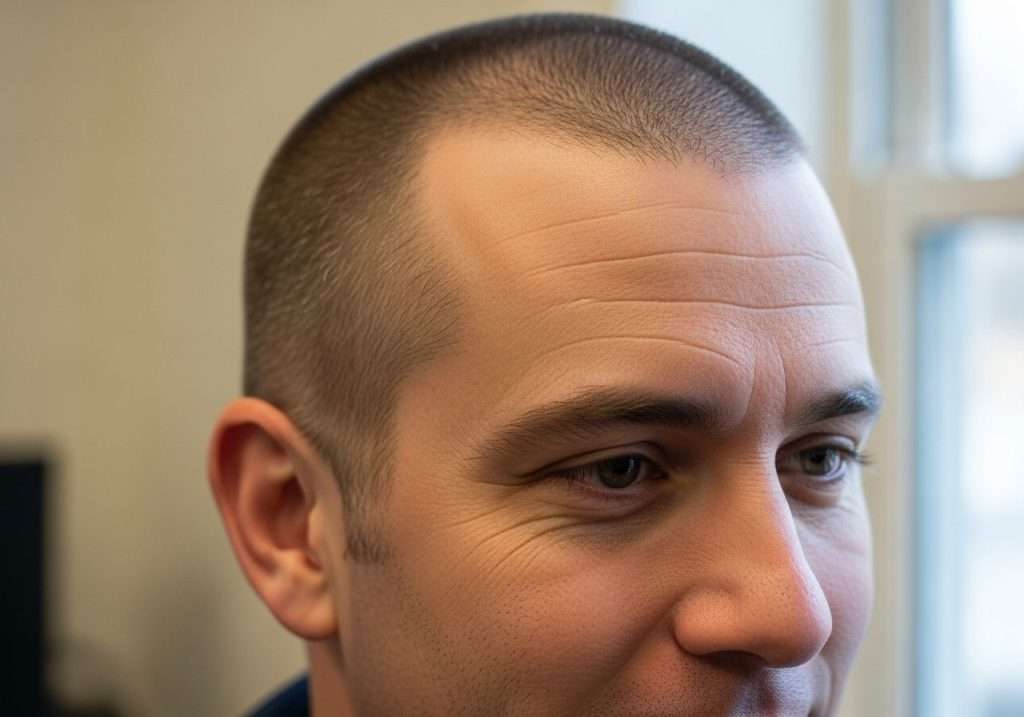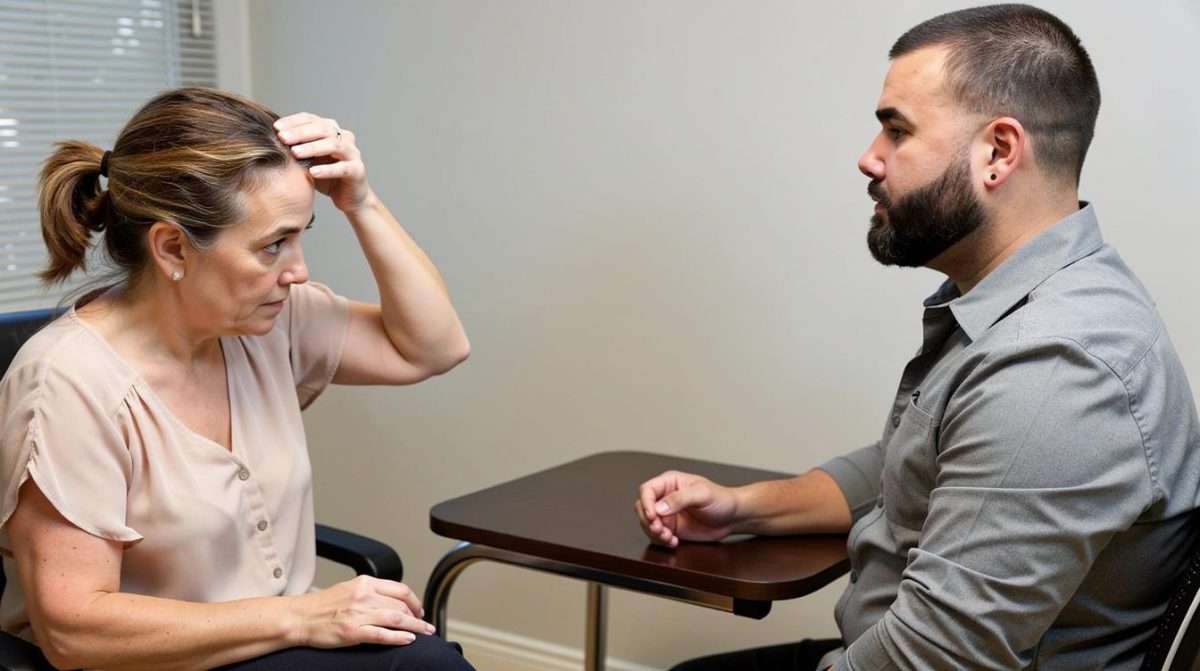
Thyroid conditions are one of the most common — and least discussed — causes of hair thinning in women. Whether you are managing hypothyroidism or another thyroid disorder, the effect on your hair can feel relentless and deeply personal. I work with women navigating exactly this challenge, using SMP density treatments to restore the appearance of fuller hair while medical treatment continues in the background.
Why thyroid conditions affect hair the way they do
The thyroid gland regulates metabolism and plays a significant role in hair follicle cycling. When thyroid hormone levels are disrupted — particularly in hypothyroidism — hair growth slows, shedding increases, and strands often become finer. This diffuse pattern affects the entire scalp rather than isolated areas, making it especially difficult to conceal.
For many women, this kind of thinning carries a weight that goes beyond the physical. Hair is closely tied to identity, confidence, and how we present ourselves professionally and socially. When hypothyroid hair thinning progresses gradually, it can feel like a slow loss of self — sometimes before a diagnosis is even confirmed.
I have seen this many times. Women come in not just looking for a cosmetic fix, but for something that helps them feel like themselves again while they wait for their thyroid levels to stabilise.
What SMP density treatment looks like for thyroid-related hair loss
Female SMP is a density procedure — not a shaved-head replication. The technique involves placing thousands of micro-impressions of pigment into the scalp between existing hairs, creating the visual impression of greater fullness and reducing the contrast between thinning areas and the surrounding scalp.
For women experiencing thyroid-related hair loss, this approach works particularly well because the thinning is typically diffuse. Pigment is placed across the top, crown, and hairline, making the scalp less visible through the hair. The result is natural-looking and requires no shaving or alteration of your existing hair.
Appointments are spaced to allow for proper healing, and I work carefully to match pigment to your natural hair colour and skin tone — including grey tones where relevant. Because thyroid-related hair loss can fluctuate as treatment progresses, I take a deliberately conservative approach to density. We can always build on results, and it is important to allow for the possibility that your natural hair may improve over time.
Coordinating SMP with your endocrinology treatment plan
One of the most important conversations I have with women managing thyroid conditions is about timing. SMP is not a replacement for medical treatment — it is a complement to it. I always encourage clients to be actively working with their endocrinologist or GP before beginning a density procedure.
If your thyroid hormone levels are still significantly unstable, it is worth discussing timing with your doctor. Some women find it helpful to wait until their levels are closer to optimal before starting SMP, so there is a clearer picture of how much density may return naturally. Others prefer to address visible thinning sooner, particularly when it is affecting their day-to-day confidence.
There are no absolute contraindications between thyroid medication and SMP, but I ask all clients to share their full medical picture before we begin. Certain medications can affect skin sensitivity and healing, and that information matters for both of us going into the process.
A thyroid-related hair loss solution like SMP density works best when it sits alongside — not instead of — a broader care plan. My role is to ensure the cosmetic side is handled with precision and an understanding of what each woman is going through, medically and emotionally.
Frequently Asked Questions
Can SMP help with hair thinning caused by thyroid conditions?
Yes. SMP density treatment places pigment between existing hairs to reduce scalp visibility and create the appearance of fuller hair. For women with thyroid hair loss, this can make a meaningful difference to confidence and appearance while medical treatment continues. It works across the top, crown, and hairline.
Do I need to stop thyroid medication before getting SMP?
No, but full disclosure is essential. Some thyroid medications can affect skin sensitivity or healing, so I ask all clients to share their complete medical history before treatment. I may recommend coordinating with your prescribing doctor to confirm timing, particularly if your hormone levels are still being adjusted.
Will SMP results change if my hair grows back as thyroid treatment improves?
SMP density treatment is designed to blend with your existing hair, so if regrowth occurs it typically integrates well with the pigment. I take a conservative approach with women managing hypothyroid hair thinning precisely for this reason, leaving room to assess natural improvement before adding further density.
Is female SMP different from procedures done for men?
Yes, entirely. Female density SMP is performed on unshaved hair and focuses on adding visual fullness between existing strands. The technique, pigment placement, and goals are tailored specifically to how women experience hair thinning — whether from a thyroid-related condition or other causes — with natural results as the priority.
How many sessions does a thyroid hair loss SMP treatment typically take?
Most women require two to three sessions spaced several weeks apart. The number depends on the degree of thinning and the density level we are working toward. Because thyroid-related hair loss can be diffuse across the scalp, we take a staged approach to ensure even, natural-looking coverage throughout the treated area.