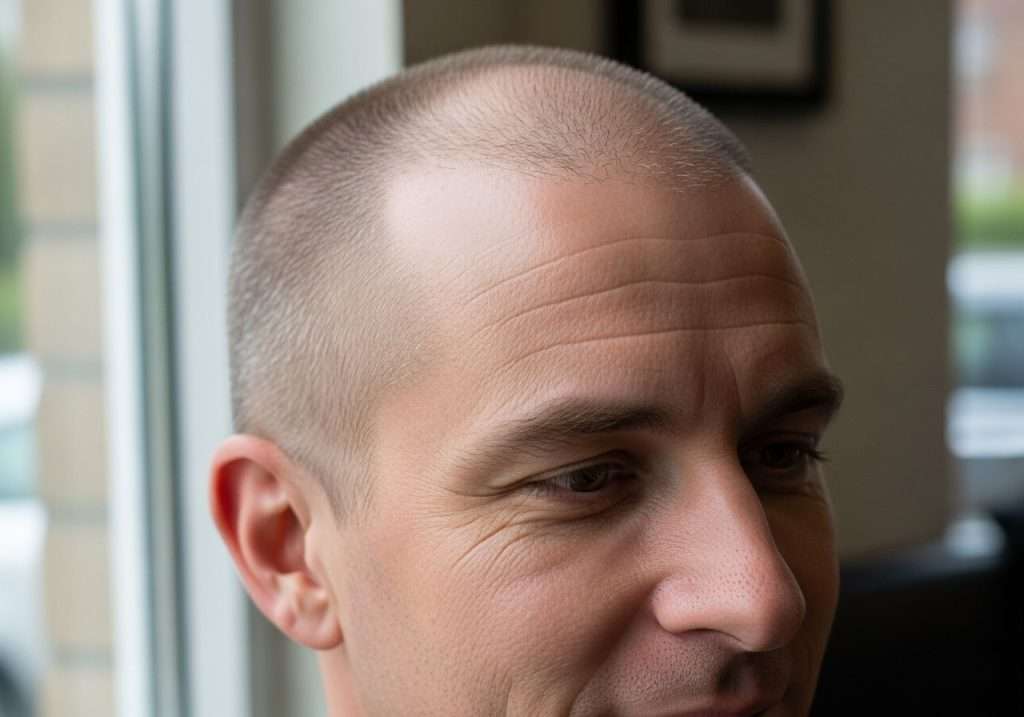
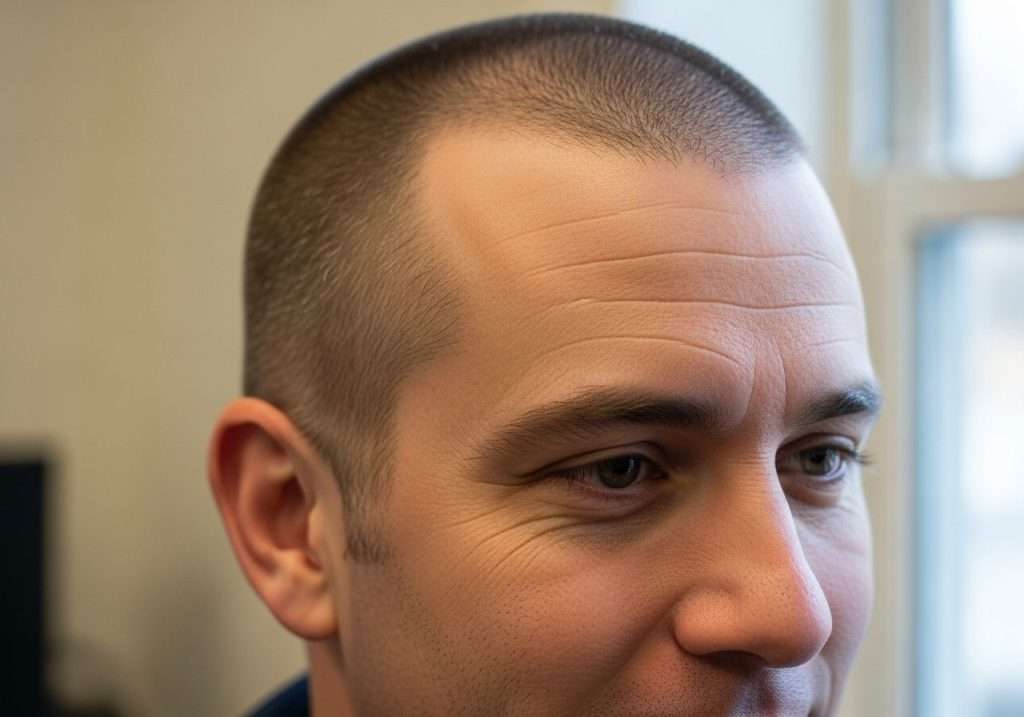
You had the transplant, it worked, and now a scar is the thing people notice first. Whether it’s a linear strip across the back of your head or a scatter of small dots, a visible scar after surgery is a frustrating outcome nobody warned you about. This article breaks down every realistic repair option so you can make a clear-eyed decision.
1. SMP is the most effective non-invasive option available
Scalp micropigmentation conceals hair transplant scars by depositing pigment directly into scar tissue, replicating the appearance of follicles and blending the scar into the surrounding scalp. No incisions, no anaesthesia, no recovery time. For the right candidate, results can reach around 85% visual camouflage.
That figure matters. SMP scar concealment is not 100%, and any practitioner who promises otherwise is misleading you. What it does deliver is a dramatic reduction in contrast between the scar and the surrounding scalp, often making the area virtually undetectable at normal social distances.
The key variable is scar texture. Flat, fully healed scars with consistent skin colour respond best. Raised, uneven, or recently formed scars are far less predictable, which is why timing and artist experience are everything.
2. FUT and FUE scars respond differently to treatment
The type of scar you have directly affects how treatable it is with SMP. FUT scars, the long linear strip left by follicular unit transplantation, are the most common type I work on. They’re visible the moment someone clips their hair short, and SMP can soften that line significantly when the scar is flat and well-healed.
FUE scars are small, round dots scattered across the donor area. They’re actually the easiest to conceal with SMP because their size and shape closely mimic natural follicle dots. A skilled artist can blend them almost invisibly into the surrounding scalp. Scalp reduction scars and old plug scars are increasingly rare, but they’re also more complex due to irregular texture and depth.
3. Laser treatment is not a standalone scar solution
Laser treatments, particularly fractional laser resurfacing, can improve the texture and colour of scar tissue over multiple sessions. They stimulate collagen remodelling and may reduce raised or discoloured scarring. But they don’t camouflage a scar: they treat the underlying tissue.
In some cases, laser treatment is used before SMP to flatten and soften scar tissue, making it more receptive to pigment. Think of it as preparation, not a replacement. If your scar is raised or has a significantly different texture from the surrounding scalp, discussing laser as a precursor to SMP with a dermatologist is worth considering.
4. Revision surgery carries real risk without guaranteed improvement
Scar revision surgery aims to excise the original scar and close with a finer suture line. In ideal conditions, it can reduce the width of an FUT scar. But it’s still surgery: there’s downtime, healing time, infection risk, and the honest possibility that the new scar is no better than the original.
Revision surgery also does nothing for FUE dot scarring, which isn’t surgically correctable in any practical sense. For most people, the risk-to-benefit ratio of going back under the knife for cosmetic improvement is difficult to justify when a non-invasive option like SMP exists and produces reliable, visible results.
5. Artist experience is the single biggest factor in your outcome
Scar tissue behaves unpredictably. It absorbs pigment differently from healthy scalp skin, sometimes holding less, sometimes dispersing it unevenly. An inexperienced practitioner working on scar tissue can create blotchy, uneven results that are harder to correct than the original scar.
This is not a standard SMP session. It requires an artist who has worked specifically on scar concealment, understands how different scar types respond, and knows when to refer you elsewhere rather than push forward. Look for formal SMP certification and, ideally, membership of a recognised body such as the Society of Permanent Cosmetic Professionals. Ask to see documented before-and-after work on scar cases specifically, not just hairline density work.
The technique is only as good as the hands performing it. That’s the truth the before-and-after photos don’t always tell you.
If you’re weighing your options after a hair transplant left a scar behind, the decision comes down to this: laser can improve texture, revision surgery can reduce width at some risk, and SMP is the most reliable non-invasive route to visual camouflage. For flat, healed scars, SMP consistently delivers the most meaningful cosmetic improvement with the least intervention required.
Frequently Asked Questions
Can SMP completely hide a hair transplant scar?
SMP can conceal a hair transplant scar to approximately 85% visual camouflage on flat, fully healed scars with consistent skin texture and colour. Complete invisibility isn’t a realistic promise. The goal is to dramatically reduce contrast so the scar is undetectable at normal viewing distances, which SMP achieves reliably in the right candidates.
How long should I wait after a hair transplant before having scar revision SMP?
You should wait until the scar is fully healed and stable, which typically means at least 12 months after your transplant procedure. Scar tissue continues to mature and change for up to a year. Treating an immature scar produces unpredictable pigment retention and increases the risk of an uneven result that’s difficult to correct.
Is FUT scar treatment with SMP painful?
Most clients describe SMP on scar tissue as mildly uncomfortable rather than painful, and scar tissue itself often has reduced nerve sensitivity due to the nature of the healing process. A topical numbing agent is typically applied before the session begins, which further minimises discomfort. Sessions on scar areas are usually shorter than full scalp treatments.
How many SMP sessions does scar concealment typically require?
Scar concealment with SMP usually requires two to three sessions spaced four to six weeks apart. Scar tissue is less predictable than healthy scalp skin in how it holds pigment, so building coverage gradually allows the artist to assess retention after each session and adjust technique accordingly for the best possible outcome.
What makes FUE scars easier to treat than FUT scars?
FUE scars are small, circular dots that closely resemble the natural shape of a hair follicle when viewed from a distance, making them easier to blend using SMP pigment dots. FUT scars are long, linear strips that require the artist to break up a much larger and more visible area of contrast, which demands more technical precision and session time.