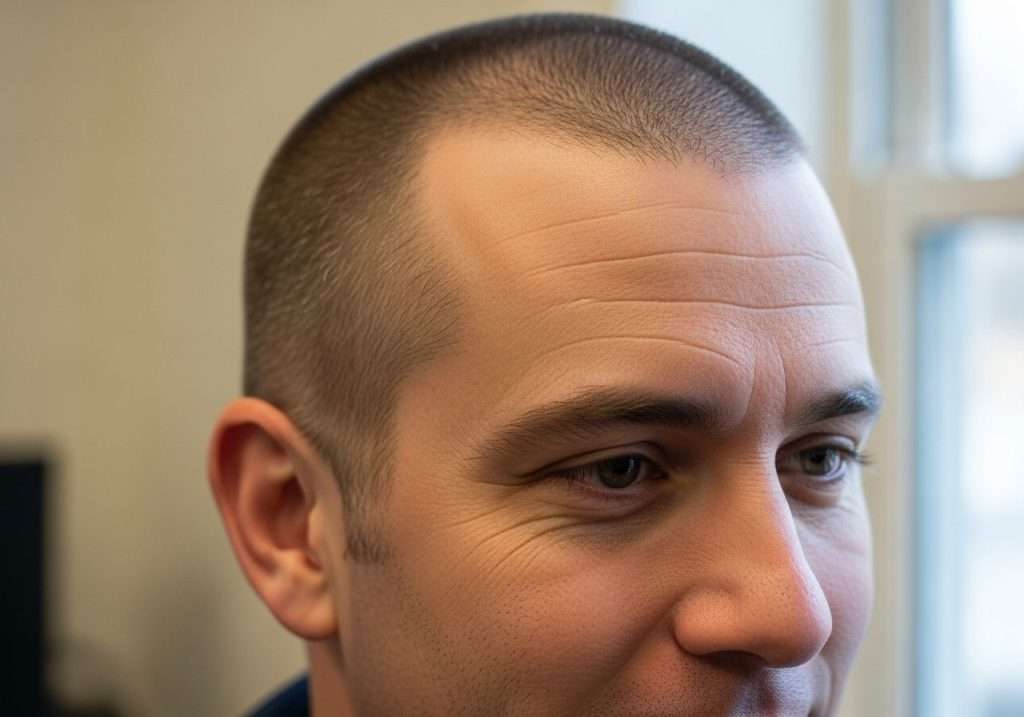
You have done the research, you like what you see, and now you are asking the one question that actually matters before you commit: how long will this last? That is a fair question, and it deserves a straight answer. This article breaks down exactly what to expect from male density SMP results, what makes them fade faster, and what you can do to protect your investment.
The realistic longevity figure for male density SMP
Male density SMP typically lasts three to five years before a touch-up is needed. That is the honest, working figure based on clinical follow-up data and real-world client outcomes. Some men see results hold well beyond that window; others find they are back in the chair closer to the three-year mark. The difference usually comes down to a handful of variables you can actually influence.
What is happening biologically is straightforward. The medical-grade pigment is deposited at the epidermal to upper-dermal interface, roughly 1.5 to 2 millimetres into the dermis. Over time, natural epidermal turnover clears surface pigment within approximately 27 days per cycle, while dermal pigment gradually fades as immune cells process the particles and sun exposure breaks them down. The result does not disappear overnight. It softens, slowly, over years.
A 2025 case series from the Second Affiliated Hospital of Chongqing Medical University tracked ten patients post-treatment and found average visual density scores of 8.7 out of 10 immediately after treatment, dropping modestly to 7.7 at six months. For men with androgenetic hair loss specifically, satisfaction remained high. Scarring alopecia cases showed more noticeable fading, which is worth knowing if that applies to your situation.
What accelerates fading and what slows it down
UV exposure is the single biggest enemy of SMP longevity. Sun breaks down dermal pigment faster than almost anything else, which is why SPF 30 to 50 applied directly to the scalp is not optional once you have healed. It is the simplest, most affordable thing you can do to extend your results.
Skin type matters too. Men with oilier skin tend to see faster fading, because higher sebum production accelerates the turnover of surface layers. If your scalp runs oily, factor that into your expectations. Conversely, drier and more mature skin tends to hold pigment longer.
Cellular metabolism plays a role as well. Men who are very physically active, regularly run high body temperatures, or have faster-than-average skin turnover will notice results softening sooner. Certain medications can also influence fading, so it is worth mentioning anything you are taking at your consultation.
On the other side of the equation, consistent SPF use, avoiding prolonged sun exposure, and keeping the scalp moisturised all support longer-lasting results. The aftercare window matters too. During days one to four after each session: keep water off the scalp, avoid shampooing, sweating, and shaving. During days five to ten: use gentle washing only and avoid direct sun exposure. From day ten onwards, SPF becomes a daily habit. Full healing takes approximately 30 days after your final session, and what you do during that month shapes how the result settles.
How SMP sessions are structured for density work
Density SMP for male pattern baldness does not happen in a single sitting. Most men need two to four sessions, spaced several weeks apart. The pigment dot density builds progressively across those sessions, starting at around 40 dots per square centimetre and increasing to 80 to 100 dots per square centimetre by the final session. This layered approach is what creates a natural-looking depth rather than a flat, artificial appearance.
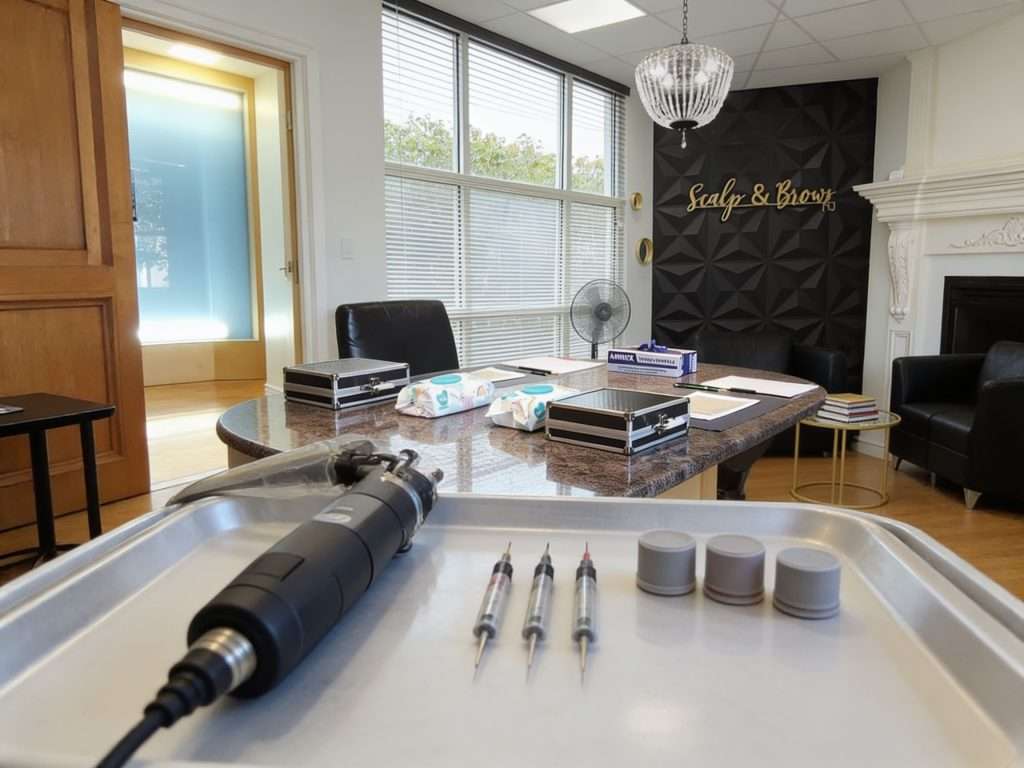
Each session runs between one and five hours depending on the coverage area. A 0.2 mm single-point needle handles hairline borders with precision, while a 0.25 mm triple-point needle is used across the vertex, temporal, and occipital regions for broader coverage. Zone-specific needle selection is one of the details that separates a refined result from an obvious one.
The session structure is where the foundation of longevity is built. Pigment applied too superficially fades quickly. Pigment deposited too deep shifts in colour, sometimes towards blue or green. Precision at this stage protects your result for years.
Planning your touch-up schedule realistically
A touch-up every three to four years is a sensible planning assumption for most men. It is not a failure of the original work. It is a normal part of maintaining a cosmetic procedure that operates within living skin, subject to sun, ageing, and biology.
The touch-up itself is typically shorter and less involved than the original course of treatment, because you are refreshing existing work rather than building from scratch. Think of it in the same way you would think about maintaining a haircut or any other grooming commitment. The upfront cost covers the initial two to four sessions; the ongoing cost is a periodic refresh.
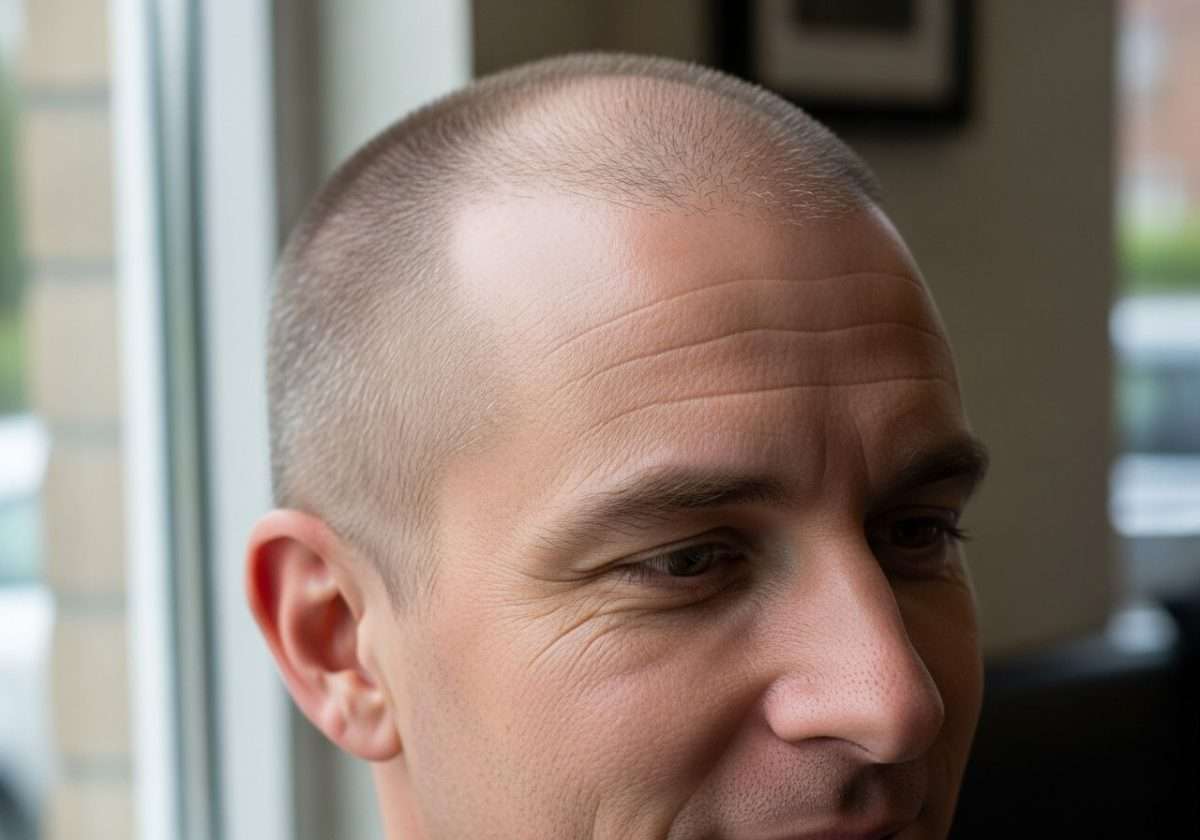
SMP for male density is also significantly less invasive, less costly, and carries a shorter recovery period than hair transplant surgery, which is worth keeping in mind if you are comparing options. It does not stimulate hair regrowth or affect existing follicles. What it does is reduce the visible contrast between scalp and hair, and it achieves this with a level of consistency that most men find genuinely confidence-restoring.
If you are planning ahead, budget for a touch-up somewhere in that three-to-five-year window, protect your scalp from the sun daily, and pay attention to aftercare in the weeks following each session. Those three habits, more than anything else, determine where on that longevity spectrum your results land.
Frequently Asked Questions
How long does male density SMP typically last before fading noticeably?
Male density SMP typically lasts three to five years before the results soften enough to warrant a touch-up. Fading is gradual rather than sudden. Factors such as UV exposure, skin oiliness, and cellular metabolism influence where in that window your results land. Consistent SPF use is the most effective way to extend longevity.
How often should men schedule touch-ups for density SMP?
Most men benefit from a touch-up every three to four years for density SMP. This is a routine maintenance appointment rather than a full re-treatment. Because the original pigment work is still partially present, touch-up sessions are typically shorter than the initial course, which usually spans two to four full sessions.
Does sun exposure really affect how long scalp micropigmentation lasts?
Yes, UV exposure is the most significant external factor affecting scalp micropigmentation longevity. Sun breaks down dermal pigment more quickly than almost anything else. Applying SPF 30 to 50 directly to the scalp each day after healing is complete is the single most effective habit for protecting your SMP results over the long term.
Does oily skin cause SMP density results to fade faster?
It can. Men with oilier scalps tend to experience slightly faster fading because higher sebum production accelerates surface skin turnover. If your scalp runs oily, it is reasonable to expect results at the shorter end of the three-to-five-year range and to plan your touch-up schedule accordingly from the outset.
What aftercare steps protect SMP density results during the healing period?
For days one to four after each session, avoid water on the scalp, shampooing, sweating, and shaving. From days five to ten, use gentle washing only and avoid direct sun exposure. From day ten onwards, apply SPF 30 to 50 daily. Full healing takes approximately 30 days after your final session, and this period directly shapes how the result settles.