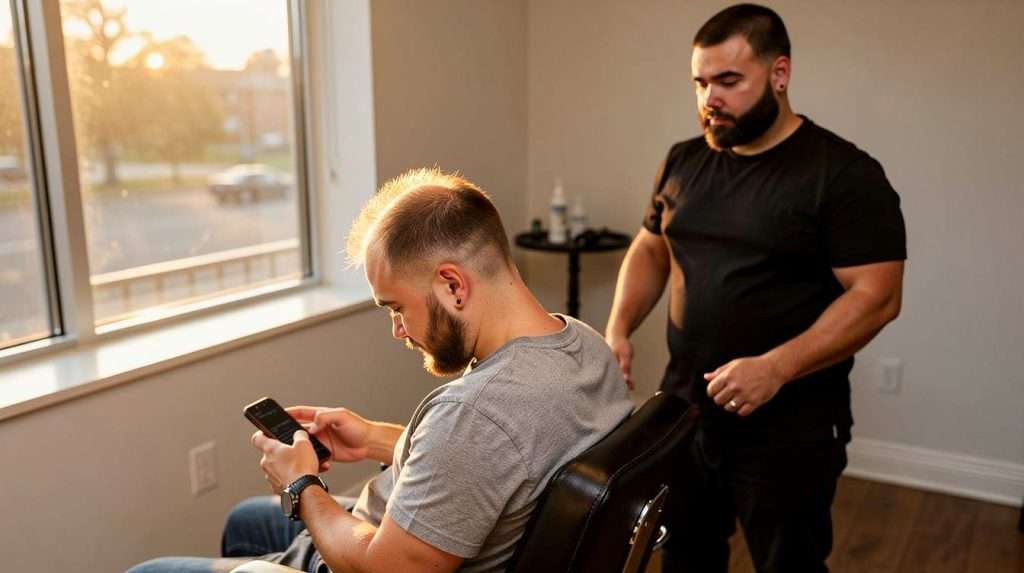
You’re not going bald in the traditional sense — you still have hair, but it’s noticeably thinner and the scalp is starting to show through. You want a solution that doesn’t involve shaving your head or signing up for surgery. This article explains exactly how SMP density treatment works at different stages of male pattern thinning, what you’ll see after each session, and how long the results hold up.
What SMP density treatment actually does
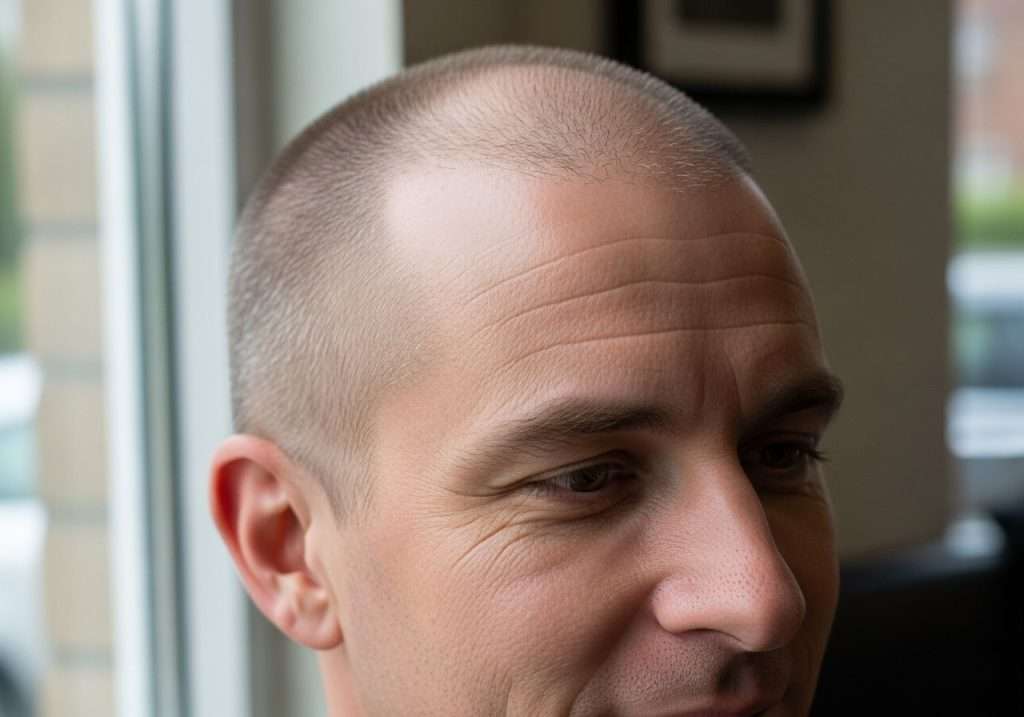
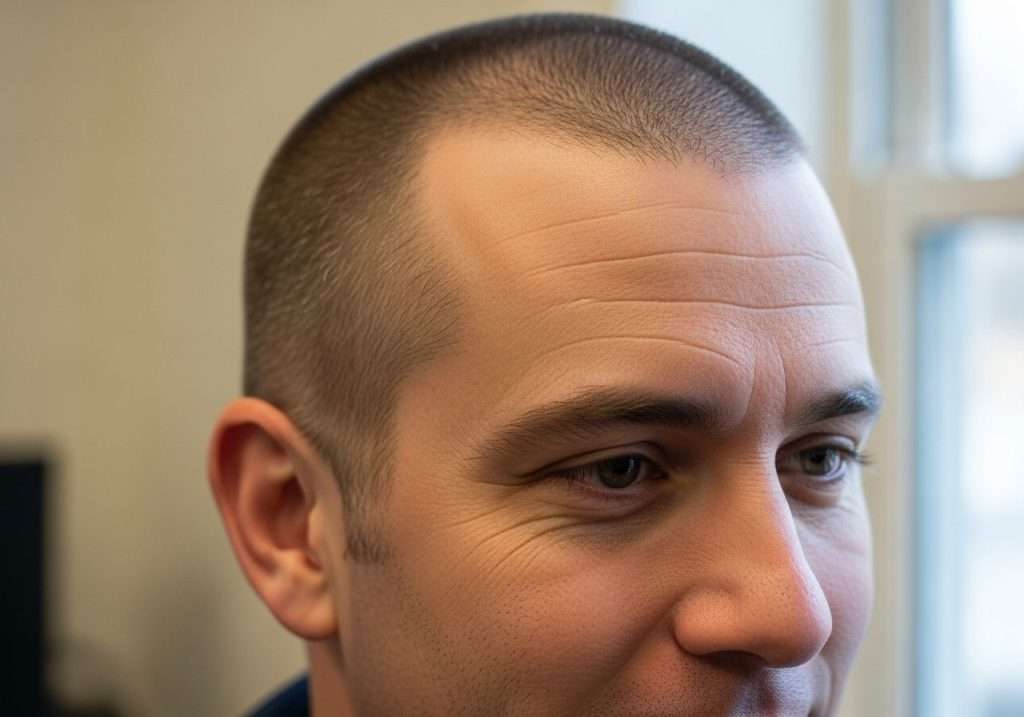
Scalp micropigmentation for thinning hair works by depositing tiny, hair-follicle-sized pigment dots between your existing hair. The goal isn’t to replicate a shaved-head look: it’s to fill the visual gaps that make sparse hair look sparse. When the dots are placed correctly, your eye reads density rather than scalp.
I’ve been a barber for fifteen years, and the principle is straightforward: light scalp visible through fine hair creates contrast, and contrast is what reveals thinning. SMP density treatment reduces that contrast. Your hair stays exactly as it is; the scalp beneath it simply stops looking bare.
This is fundamentally different from a shaved-head SMP treatment. The pigment shade, dot size, and placement all have to work with living hair rather than replacing it visually. That requires a different technique and a sharper eye.
How your thinning stage shapes the treatment plan
Not all thinning looks the same, and the approach has to match where you are on the Norwood scale. Early-stage thinning, such as a slightly receding temple or a crown that’s just starting to thin, typically needs one or two sessions to achieve a natural-looking result. The existing hair density does a lot of the work; the SMP fills what’s missing.
Mid-stage thinning, where you have significant coverage loss across the crown or top of the scalp, usually calls for two to three sessions. The pigment needs to be built up gradually so the result looks like natural follicle depth, not a flat block of colour. Rushing this is the most common mistake I see from practitioners who treat density work like a shaved-head procedure.
More advanced diffuse thinning, where hair is fine and sparse across most of the scalp, can still be treated effectively, but expectations need to be honest. SMP won’t make fine hair look thick. It will make the scalp look occupied, which is a significant visual improvement but not the same thing. A thorough consultation will tell you clearly which category you’re in.
What to expect session by session
A typical density treatment runs across two to three sessions, spaced roughly seven to ten days apart. The first session lays the foundation: establishing the dot pattern, matching the pigment to your natural hair colour, and beginning to build coverage in the primary thinning zones. You’ll leave looking slightly more defined but not dramatically different. That’s intentional.
By the second session, the pigment from session one has settled (it lightens slightly as it heals), and I can assess how your scalp has taken the colour before adding the next layer. This layering process is what creates depth. A flat single-session application looks artificial; a built-up result looks like real follicle shadow.
The third session, if needed, is about refinement: fine-tuning edges, evening out any areas where the skin absorbed pigment differently, and making sure the overall result holds together under different lighting conditions. Most clients leave their final session genuinely surprised by how natural it looks, especially compared to what they expected from a so-called hair tattoo procedure.
Longevity and what affects it
SMP for thinning hair typically holds well for three to five years before a touch-up becomes worthwhile. It doesn’t disappear: it gradually softens and lightens as the pigment disperses slightly in the skin over time. For density work this is actually forgiving, because fading tends to make the treatment look more natural rather than patchy.
The factors that accelerate fading are sun exposure, the use of harsh exfoliating products on the scalp, and skin type. Oily skin tends to break down pigment faster than dry or normal skin. I always advise clients to use SPF on the scalp in summer, not just to protect the SMP, but because a sun-damaged scalp shows thinning more aggressively anyway.
Maintaining your existing hair is also part of the picture. If your natural hair continues to thin after treatment, the relationship between your real follicles and the pigmented ones shifts. A single follow-up session every few years keeps everything balanced. It’s a manageable, low-disruption commitment for a result that’s visible every day.
Frequently Asked Questions
Will SMP for thinning hair look obvious up close?
When done correctly, SMP density treatment is not detectable at normal social distances. The pigment dots are sized to mimic real follicles, and because your existing hair is still present, the result blends naturally. Poor technique, such as wrong dot size or mismatched colour, is what makes scalp micropigmentation look artificial, not the procedure itself.
Can I keep my current hairstyle after SMP density treatment?
Yes. Density SMP is specifically designed for men who want to keep their hair at its current length. You don’t need to shave or cut your hair shorter. The pigment works beneath and between your existing hair to reduce scalp visibility, so your usual styling routine stays completely intact after treatment.
How do I know if I’m a good candidate for scalp micropigmentation density work?
Good candidates are men with diffuse thinning, a visible scalp through existing hair, or patchy density loss. A thorough consultation will assess your thinning pattern, skin type, and hair colour to confirm suitability. SMP works across a wide range of Norwood stages, though realistic expectations depend on how advanced the thinning currently is.
Does the hair tattoo effect fade differently on thinning hair than on a shaved head?
Yes, and usually more forgivingly. On a shaved scalp, fading pigment is easier to spot against bare skin. On a density treatment, the gradual softening of pigment over three to five years tends to blend naturally into the surrounding hair. Touch-ups remain straightforward, but the in-between years rarely look problematic.
How many SMP sessions does thinning hair typically require?
Most density treatments require two to three sessions, spaced seven to ten days apart. Early-stage thinning can often be addressed in two sessions. More advanced diffuse thinning typically needs three to allow proper layering of pigment. Each session builds on the last, which is what creates a realistic depth rather than a flat or painted appearance.