You’ve done the research, you like what you see, and now one question is holding you back: how long is this actually going to last? It’s the right question to ask before committing to any procedure. This article breaks down the real lifespan of SMP, what makes it fade faster or slower, and what a realistic maintenance schedule looks like in practice.
What a realistic SMP lifespan looks like
Scalp micropigmentation is a long-term cosmetic procedure, but it isn’t permanent in the same way a traditional tattoo is. For most clients, a well-executed SMP treatment holds strong for three to five years before a top-up becomes worthwhile. Some clients go longer; others need attention sooner. That range exists for real reasons, not vague ones.
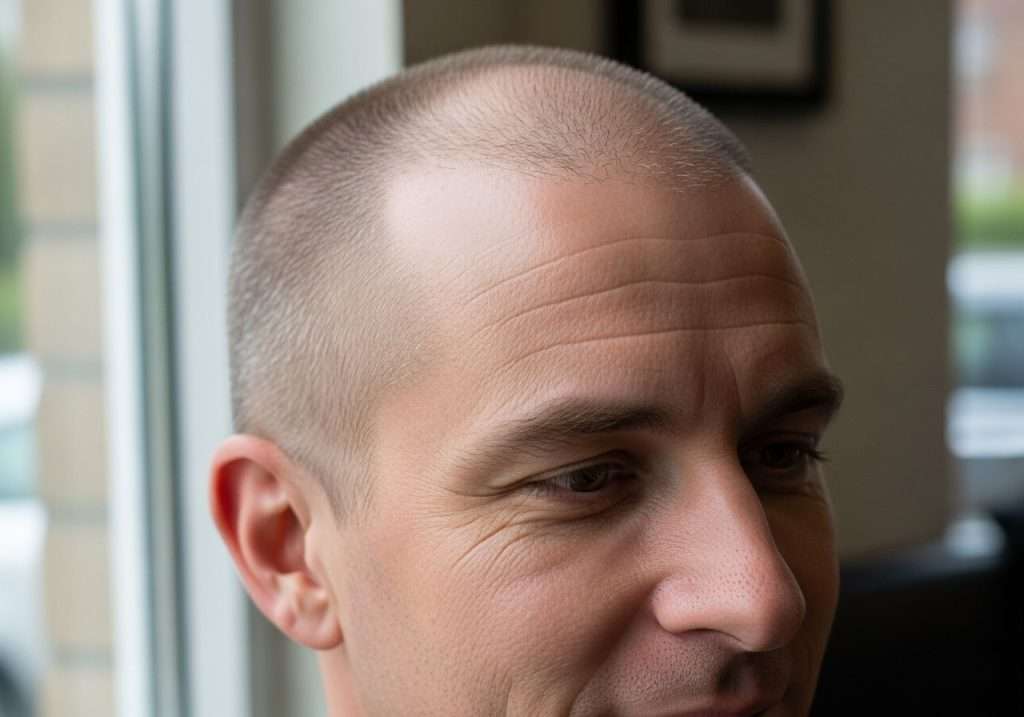
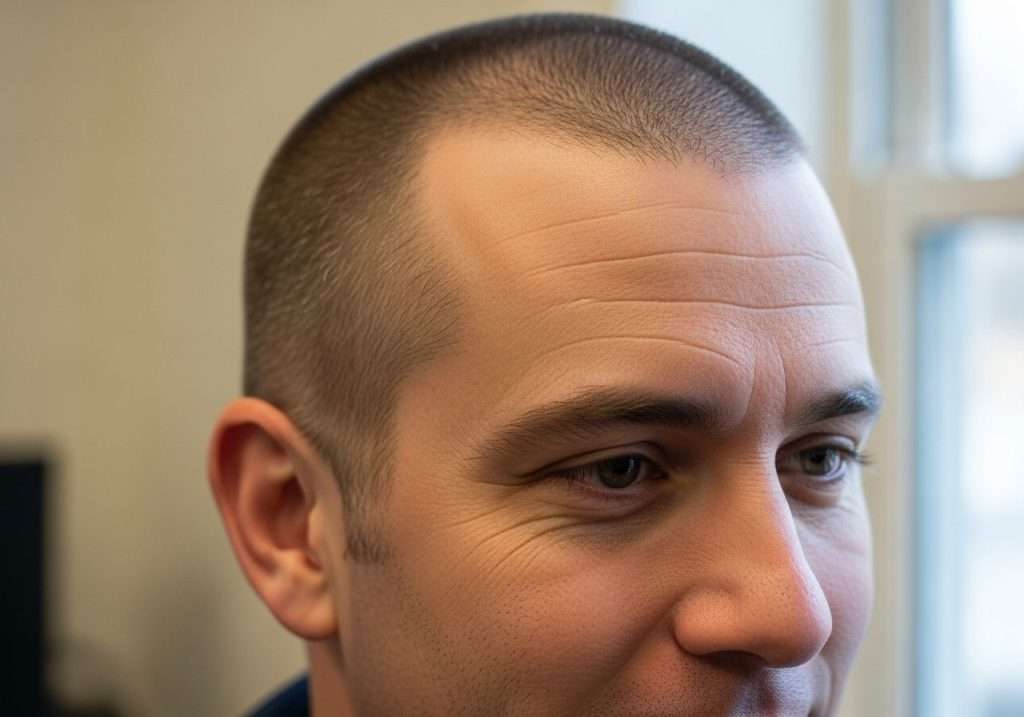
The pigment is deposited into the upper dermis, shallower than where traditional tattoo ink sits. This is deliberate: it keeps the dots crisp and replicates the appearance of real follicles. The trade-off is that the pigment interacts more with cell turnover, sun exposure, and your skin’s own chemistry. Those are the variables that govern SMP longevity over time.
What you won’t see is sudden, dramatic fading overnight. SMP softens gradually, usually showing as a slight lightening or a subtle loss of contrast before it needs refreshing. Clients often tell me they hadn’t noticed it happening until they looked at their early photographs.
The factors that speed up fading
Sun exposure is the single biggest driver of premature fading. UV radiation breaks down pigment particles, and a shaved head gives the scalp zero natural protection. Spending significant time outdoors without SPF on your scalp is the fastest way to shorten the life of your treatment.
Skincare habits matter more than most people expect. Exfoliating products, chemical peels, and anything with high concentrations of retinoids accelerate cell turnover on the scalp, pushing pigment out faster. Even some moisturisers and scalp oils can affect micropigmentation durability over time if used aggressively and daily. You don’t have to abandon your routine entirely, but being selective about what you apply to your scalp directly extends your results.
Skin type plays a role too. Oilier skin tends to fade SMP slightly faster because sebum production creates a film that interacts with the pigment layer. Clients with drier skin sometimes find the pigment holds more crisply for longer. Neither is a dealbreaker, but knowing your skin type helps set accurate expectations from the start.
Lifestyle factors such as frequent swimming in chlorinated pools and heavy daily sweating also contribute to faster fading. These don’t make SMP impractical; they just mean sun protection and a mindful aftercare routine become more important, not less.
How the initial treatment affects long-term durability
Technique matters enormously. SMP placed too deep loses its crisp dot structure and spreads over time; placed too shallow and it simply won’t hold. The difference between a result that looks clean at two years and one that looks blurry is often decided on the table during the original sessions.
As a barber of fifteen years, I spent a career understanding how hair grows, how hairlines age, and what actually looks natural on a real head. That eye carries directly into SMP work. When the hairline is designed with ageing in mind and the pigment is placed with precision rather than speed, the result doesn’t just look better on day one; it ages more gracefully over the years.
The number of initial sessions also matters. A properly completed SMP course typically involves two to three sessions. Rushing the process or skipping a pass leaves the result thinner than it should be, which means fading becomes apparent earlier than it otherwise would. A fully built, layered result simply has more to give before a touch-up is needed.
Touch-ups: when you need one and what to expect
A touch-up session refreshes the pigment, restores contrast, and allows for minor adjustments to the hairline if your preferences have shifted. Most clients return somewhere between three and six years after their original treatment. The session is significantly shorter than the initial course, usually a single visit, because the foundation is already there.
SMP responds well to refreshing. Unlike some cosmetic procedures where repeat treatments become complicated, a touch-up for scalp micropigmentation is straightforward when the original work was done correctly. The existing pigment provides a roadmap, and layering fresh pigment over it restores depth quickly.
Between sessions, the most practical thing you can do is apply SPF to your scalp consistently. A broad-spectrum SPF 30 or higher, used daily, is the simplest and most evidence-backed way to protect your investment and genuinely extends the interval between top-ups.
Thinking of SMP as a low-maintenance, long-life procedure is accurate. Thinking of it as zero-maintenance forever isn’t. With reasonable care, it’s one of the most durable solutions available for a clean shaved-head look, and the touch-up process is far less involved than most people anticipate.
Frequently Asked Questions
How long does scalp micropigmentation last before it needs a touch-up?
For most clients, SMP holds well for three to five years before a touch-up is recommended. Micropigmentation durability varies based on sun exposure, skin type, and aftercare habits. Some clients comfortably go six years or more before refreshing, especially with consistent SPF use on the scalp.
Does scalp micropigmentation fade evenly or in patches?
SMP typically fades gradually and evenly rather than in obvious patches. You’ll usually notice a softening of contrast and a slight lightening of the overall tone before any unevenness becomes visible. Patchy fading is more often linked to inconsistent aftercare or sun exposure concentrated on specific areas of the scalp.
Will swimming or sweating damage my SMP?
Regular swimming in chlorinated pools and heavy daily sweating can contribute to faster pigment fading over time. They won’t ruin your SMP suddenly, but they do mean your aftercare routine needs to be more consistent. Using SPF on the scalp and avoiding harsh exfoliating products helps offset the impact on SMP longevity.
What can I put on my scalp without affecting the pigment?
Gentle, fragrance-free moisturisers are generally fine. Avoid high-strength retinoids, chemical exfoliants, and heavily medicated scalp treatments applied directly over the treated area, as these accelerate cell turnover and reduce micropigmentation durability. When in doubt, ask your SMP technician before adding a new product to your routine.
Does a touch-up session take as long as the original SMP treatment?
No. A top-up is significantly shorter than the initial course. Because the foundation and hairline are already established, a single refresh session is usually all that’s needed. The existing pigment provides a clear guide, and layering fresh pigment over it restores depth and contrast quickly, often within a couple of hours.