Your brows looked perfect for months, and now they’re patchy, lighter, or uneven. You’re not sure whether something went wrong or whether this is simply how microblading works. This article explains exactly when a touch-up is needed, what happens during the appointment, and what you should expect to pay, so you can make a confident decision.
Why microblading fades and what that means for your brows
Microblading deposits pigment into the upper layers of the skin using a handheld blade to create fine, hair-like strokes. Because the pigment sits shallower than a traditional tattoo, it naturally fades over time. That’s by design, not a flaw.
Most people see noticeable fading between 12 and 18 months after their last session. How quickly that happens depends on skin type, sun exposure, skincare routine, and how oily your skin is. Oily skin can cause strokes to blur or fade faster because excess sebum disrupts pigment retention. People using retinol, exfoliating acids, or spending a lot of time outdoors will also notice faster fading.
The fading isn’t always uniform, either. Some strokes hold better than others, which can leave brows looking patchy. That’s one of the clearest signals that microblading maintenance is overdue.
What actually happens at a touch-up appointment
A touch-up is not a repeat of your initial procedure from scratch. It’s a targeted session focused on what your brows actually need at that point: rebuilding faded strokes, adjusting shape, adding density in sparse areas, or tweaking the colour if the pigment has shifted warm or cool over time.
The appointment is typically shorter than your original session. Where your first microblading procedure might have taken two to two-and-a-half hours including consultation and numbing, a routine maintenance appointment usually runs between 60 and 90 minutes. Healing is generally smoother the second time around, with less scabbing and faster settling of colour, though some skin trauma is still normal given the nature of the technique.
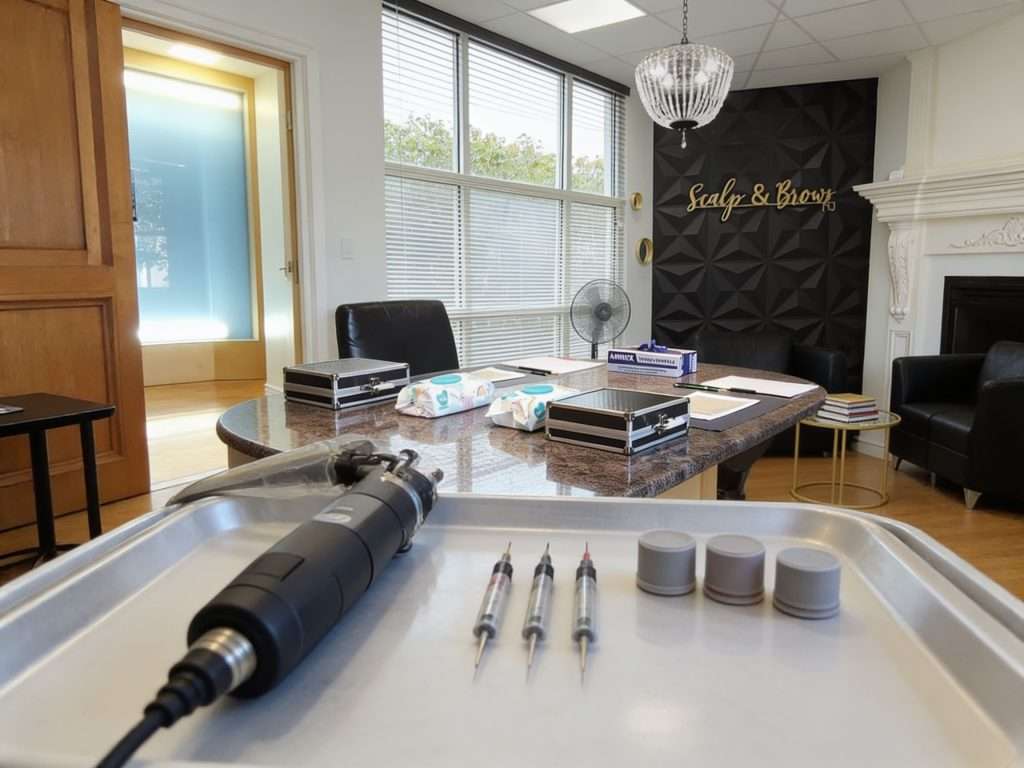
It’s worth knowing that microblading causes slightly more skin trauma than machine-based alternatives like nano brows, which use a digital device rather than a handheld blade. If your skin has become more sensitive or reactive since your first session, raise that with your artist before booking.
How to time your microblading refresh appointment
There are two types of touch-up appointments, and they serve different purposes. The first is your initial top-up, usually scheduled four to eight weeks after your original session. This is built into the microblading process: your skin heals, some pigment is lost, and that first follow-up fills in gaps and finalises the result. Skipping it often means the brows never reach their full potential.
The second type is your ongoing maintenance appointment, booked once the brows have genuinely faded. For most people, that’s somewhere between 12 and 18 months. Those with very dry skin and a careful sun-protection routine can sometimes stretch that closer to two years. People with oilier skin or more active lifestyles may need to return closer to the 12-month mark.
A useful rule: when your brows have faded by roughly 30 to 40 per cent and you’re filling them in daily again, it’s time to book. Don’t wait until the strokes have almost entirely disappeared. Refreshing while visible pigment remains gives your artist something to work with and usually produces a more natural result.
What a touch-up costs and how it differs from starting again
Touch-up pricing sits meaningfully below the cost of a full initial procedure. Expect a maintenance appointment to run at roughly 30 to 50 per cent of your original price, though this varies by artist, location, and how much work the brows need. If you’ve left it very long and the pigment has almost entirely cleared, some artists will treat the session as a new procedure and price accordingly.
Ask your artist about their specific touch-up policy before you book your first session. Some practitioners include the four-to-eight-week top-up in the initial price; others charge separately. Knowing this upfront avoids surprises.
If you’re considering complementary services, it’s useful to understand how microblading sits alongside other brow techniques. Nano brows tend to hold longer and suit a wider range of skin types. Some clients transition to nano brows at their first refresh appointment if their skin has become oilier or if they want a crisper, longer-lasting result. That’s a conversation worth having with your artist rather than assuming one approach fits everyone.
Consistent microblading maintenance keeps brows looking intentional rather than grown-out, and each well-timed touch-up protects the investment you made in your first session. Understanding the timeline and knowing what to ask means you’ll always be one step ahead of the fade.
Frequently Asked Questions
How often do you need a microblading touch-up?
Most people need a microblading touch-up every 12 to 18 months, depending on skin type, sun exposure, and skincare habits. Oily skin or regular use of exfoliating products can accelerate fading. A four-to-eight-week top-up after your initial session is also standard and should be factored into your plan from the start.
Does a touch-up hurt more than the original microblading session?
Most clients find touch-up appointments more comfortable than their first session. Topical numbing is applied beforehand, and because less overall work is usually needed, the skin experiences less cumulative trauma. That said, microblading involves more skin trauma than machine techniques like nano brows, so some sensitivity is still normal.
What happens if you skip your microblading touch-up?
Skipping regular microblading maintenance means pigment fades unevenly, leaving brows looking patchy or faint. If you wait too long, your artist may need to treat the appointment as a full new session, which takes longer and costs more. Staying on schedule protects the quality of your results and keeps costs manageable over time.
How is a microblading refresh appointment different from the first session?
A microblading refresh appointment is shorter, more targeted, and typically less expensive than your initial procedure. Rather than building brows from scratch, the artist focuses on faded strokes, patchy areas, and any colour shifts. Healing time is usually quicker too, since the shape and overall structure are already established from the original session.
Can I switch from microblading to nano brows at a touch-up appointment?
Yes, many clients transition to nano brows at a refresh appointment, particularly if their skin has become oilier or if they want longer-lasting results. Nano brows use a digital machine rather than a handheld blade, which tends to suit a broader range of skin types. Your artist can assess your skin and advise whether switching makes sense for you.