You’re weighing up two very different answers to the same problem: do you go with a hair system that puts hair back on your head, or SMP that redefines your look entirely? Both options work, but they work for different men, different lifestyles and different budgets. This piece lays out the real comparison so you can decide with confidence.
What each option actually involves day to day
Scalp micropigmentation uses a specialised technique to deposit pigment into the upper dermis of your scalp, creating the appearance of a freshly shaved head with a defined hairline. Once the sessions are complete, there’s no daily routine, no product and nothing to remove before bed. You wake up looking exactly the same way you did when you went to sleep.
A hair system, sometimes called a hairpiece or toupee, sits on top of your scalp and is attached using tape, adhesive or clips. It needs to be cleaned, reattached and eventually replaced. Most men on a hair system visit a specialist every two to four weeks for maintenance: a standing appointment, indefinitely.
From a purely practical standpoint, the difference is significant. SMP is a set-it-and-live-your-life solution. Hair systems are an ongoing commitment that touches nearly every part of your routine, from the gym and the swimming pool to intimacy and sleep.
The cost picture over time tells a different story
Hair systems look affordable at entry level. A decent unit might cost a few hundred pounds upfront, but the cumulative cost tells a very different story. Factor in replacement units every three to six months, adhesives, specialist fitting appointments and cleaning products, and the annual spend for most men sits between £1,500 and £3,000. Over five years, that’s a substantial figure.
SMP carries a higher upfront cost, typically spread across two to three sessions. After that, the ongoing cost is minimal. Most men return for a light touch-up every three to five years, which is a fraction of what a hair system demands annually. Having worked closely with clients who’ve made both choices, I can tell you the five-year maths almost always favours SMP by a considerable margin.
Beyond the numbers, there’s the cost of time. Every fitting appointment, every reattachment, every moment spent wondering whether the bond is holding: that’s a tax on your attention that SMP simply doesn’t levy.
How each option holds up in real life
A well-made hair system, fitted and coloured correctly, can look convincing. The challenge is consistency. The unit changes over time, the colour fades differently to your natural hair, and the hairline can shift slightly between fittings. Maintaining a natural look requires vigilance and a technician you trust completely.
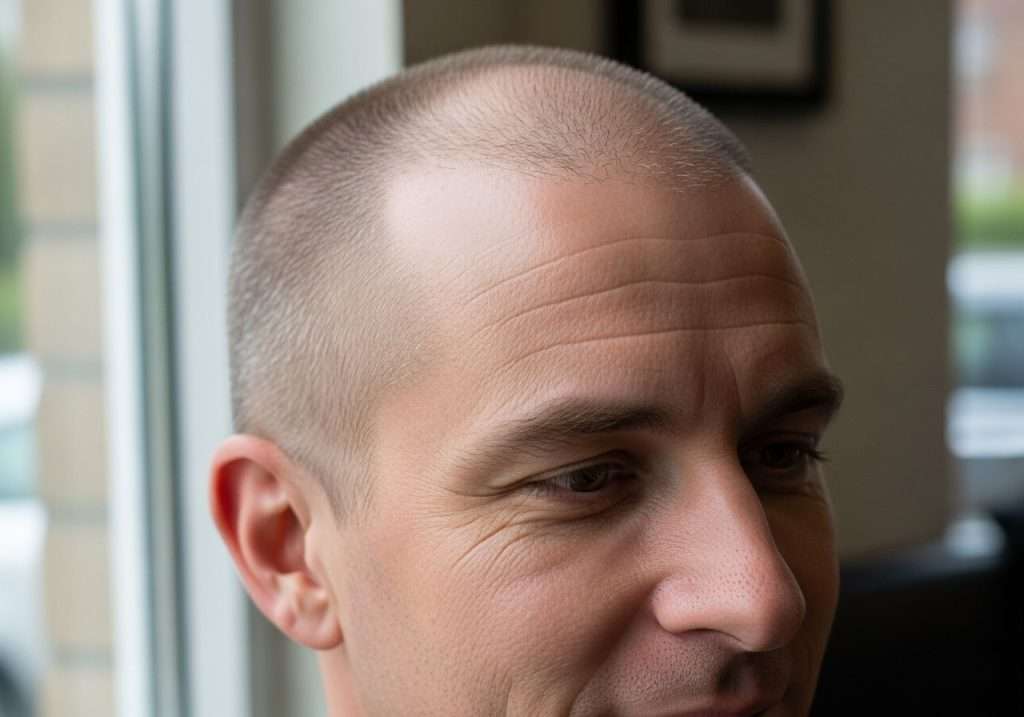
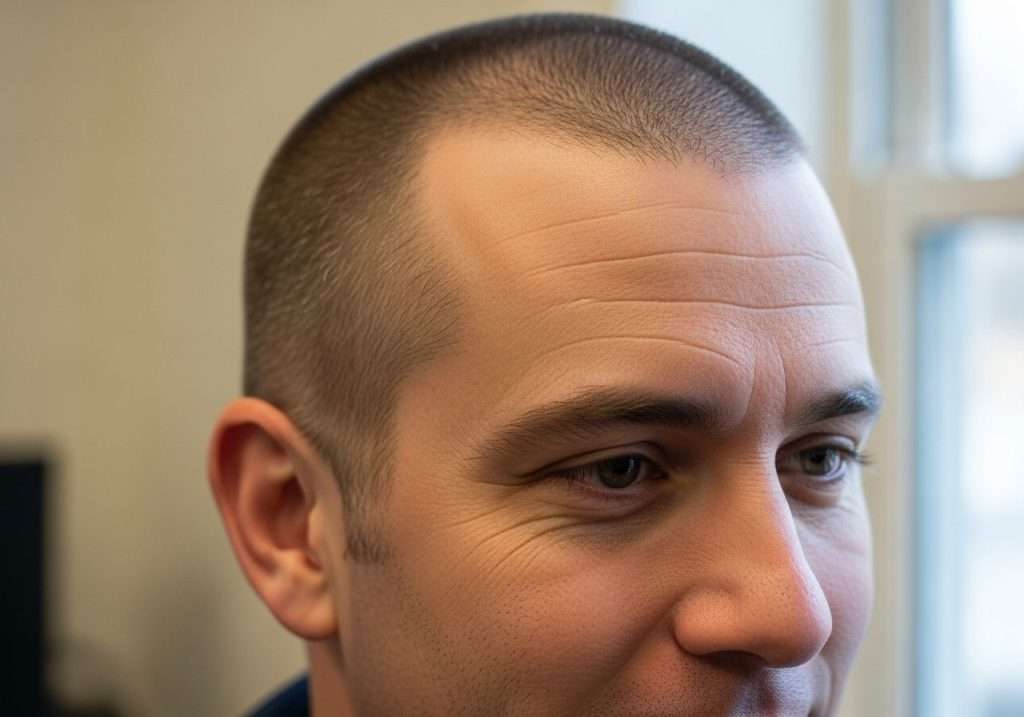
SMP, when done properly, looks like a man who keeps his head shaved clean. The hairline is built to be realistic, not so perfect that it reads as artificial. Because the pigment sits in the skin rather than on top of it, it moves with you. You can swim, sweat, sleep on it and train hard without a second thought. There’s no edge to lift, no unit to re-colour and nothing to conceal.
I spent fifteen years as a barber before transitioning into SMP full time, and the number of clients I saw managing hairpieces under their cuts was telling. Many of them were exhausted by the upkeep. The appeal of a clean, permanent solution was exactly what drew me toward this work.
Which option suits which type of man
Hair systems suit men who specifically want the appearance of actual hair on top and are willing to invest time and money consistently to maintain that. If an active lifestyle isn’t a major priority and you have access to a reliable technician, a hair system can deliver that look. It requires commitment, but for some men the result is worth it.
SMP suits men who want a resolution, not a maintenance schedule. If you train regularly, travel often, work in environments where sweat and water are factors, or simply want to stop thinking about your hair entirely, scalp micropigmentation removes the problem rather than managing it. The result is clean, confident and permanent in the sense that it doesn’t require ongoing intervention to stay intact.
It’s also worth knowing that SMP pairs naturally with a skin-fade haircut or a fully shaved head, which is one of the most popular men’s styles right now. Rather than working against the grain of modern aesthetics, it leans directly into them. That’s something a hair system, by its nature, can’t quite replicate.
Frequently Asked Questions
Does scalp micropigmentation look natural compared to a hair system?
SMP replicates the look of a shaved scalp with stubble-like pigment dots, creating a consistently natural appearance that doesn’t change between appointments. Hair systems can look convincing but require regular maintenance to stay natural-looking, and the result can vary as the unit ages and the hairline shifts between fittings.
Can I swim and exercise freely with scalp micropigmentation?
Yes. Once fully healed, SMP is completely waterproof and unaffected by sweat, swimming or physical activity. This is one of the most significant lifestyle advantages SMP holds over hair systems, which can be compromised by moisture, heat and heavy perspiration, often requiring careful management around exercise and water.
How does the long-term cost of SMP compare to hairpieces?
Over five years, a hair system typically costs significantly more when you factor in replacement units, adhesives and regular fitting appointments. SMP carries a higher upfront investment but minimal ongoing cost, usually just an occasional top-up every few years. For most men, SMP proves more cost-effective over any medium to long-term period.
Is scalp micropigmentation painful or is the process disruptive to daily life?
Most clients describe SMP as mildly uncomfortable rather than painful, similar to a light scratching sensation. Sessions typically last two to four hours, and most men return to normal activity the same day. The full procedure spans two to three sessions spaced a few weeks apart, with no significant downtime required between them.
How long does scalp micropigmentation last compared to a hair system?
SMP is a long-term solution that typically holds well for four to six years before a light refresh may be desired as pigment gradually softens. Hair systems, by contrast, need replacing every three to six months and require maintenance every two to four weeks, making SMP significantly more durable with far less ongoing intervention required.