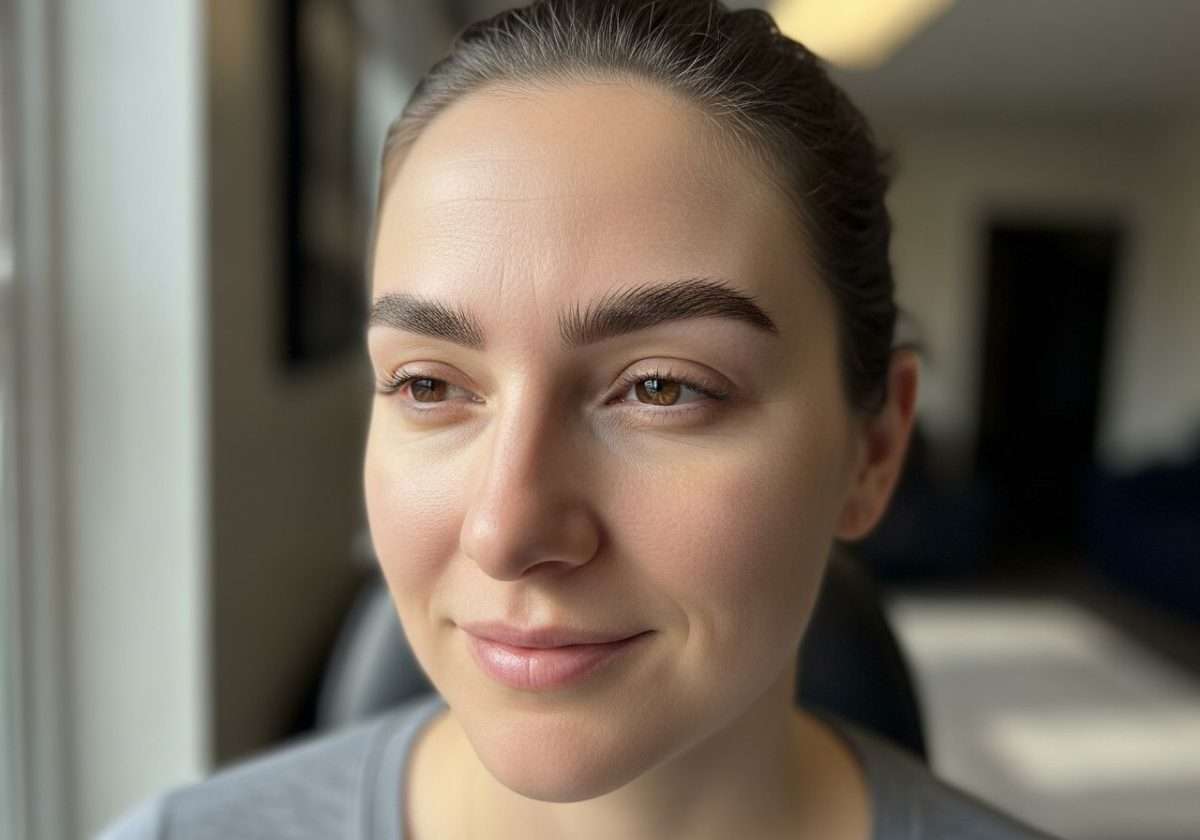
You have seen the results online and you are sold on the idea, but now you are wondering whether combo brows will actually work for your skin, your health, or your situation. That is exactly the right question to be asking. This article walks you through who tends to get the best outcomes, who should pause before booking, and what a good consultation should cover, so you can walk in informed rather than anxious.
What combo brows actually involve and why it matters for candidacy
Combo brows combine two techniques in one appointment: hairstrokes, which mimic individual brow hairs, and a soft shading or powdering technique that builds depth and fill between them. The result sits between the defined finish of powder brows and the natural texture of hairstrokes alone.
Because the procedure involves two different methods applied to the same area, skin type and skin health matter more than they do with a single technique. Both elements need to heal well and retain pigment for the finished result to look cohesive. That is why understanding your candidacy is worth doing properly, rather than guessing from a photo.
Many clients who research permanent makeup have already spent time comparing techniques. What they have not always done is think critically about whether their skin type or health history places them in the ideal category. The sections below will help you work through that.
Skin types that suit combo brows well
Dry to normal skin is the sweet spot for combo brows. Pigment retention tends to be stronger, hairstroke definition holds its shape during healing, and the shaded element settles evenly. If your skin has been described as combination but relatively balanced, you are likely still a strong candidate.
Oily skin is the type that generates the most questions, and understandably so. Higher sebum production can cause hairstrokes to blur slightly during healing, which is why the shading component of combo brows is a practical advantage for oilier skin types. Pure hairstroke techniques such as microblading often perform less predictably on oily skin. Combo brows tend to be a more durable choice because the powdered fill compensates for any softening of the hairstrokes over time.
Mature skin deserves a direct mention. Thinner or more crepey skin is not a disqualifier, but it does require an experienced practitioner. Skin elasticity should be assessed at consultation because it affects both the placement of hairstrokes and how the final healed result will look. Age alone does not exclude you; however, skin condition and elasticity do require honest evaluation.
Health considerations and contraindications you need to know
There are circumstances where combo brows should be postponed or avoided, and it is important to be clear about them rather than vague.
Active skin conditions in the brow area, including eczema, psoriasis, rosacea, and seborrhoeic dermatitis, are a contraindication. If a condition is flaring, the skin is not in a stable state for any permanent eyebrow procedure. If your condition is managed and in remission, a consultation can establish whether the timing is appropriate.
Certain medications affect both candidacy and healing. Blood thinners, including prescription anticoagulants and regular high-dose aspirin, increase bleeding during the procedure and can cause pigment to be pushed out during healing. Accutane (isotretinoin) and its derivatives are a firm contraindication; most practitioners require clients to have been off this medication for at least 12 months before any permanent makeup procedure. Topical retinoids used near the brow area can also affect skin integrity and should be disclosed at consultation.
Immune-compromising conditions, recent chemotherapy, and certain autoimmune conditions all warrant a conversation with your GP before booking. This is not a reason to rule yourself out automatically, but it is a reason to obtain medical clearance first. It is always preferable to delay a booking briefly to confirm clearance than to proceed with something that may not serve your health.
Pregnancy and breastfeeding are standard contraindications across all permanent makeup procedures. This is a straightforward pause, not a permanent no.
What a good consultation should clarify for you
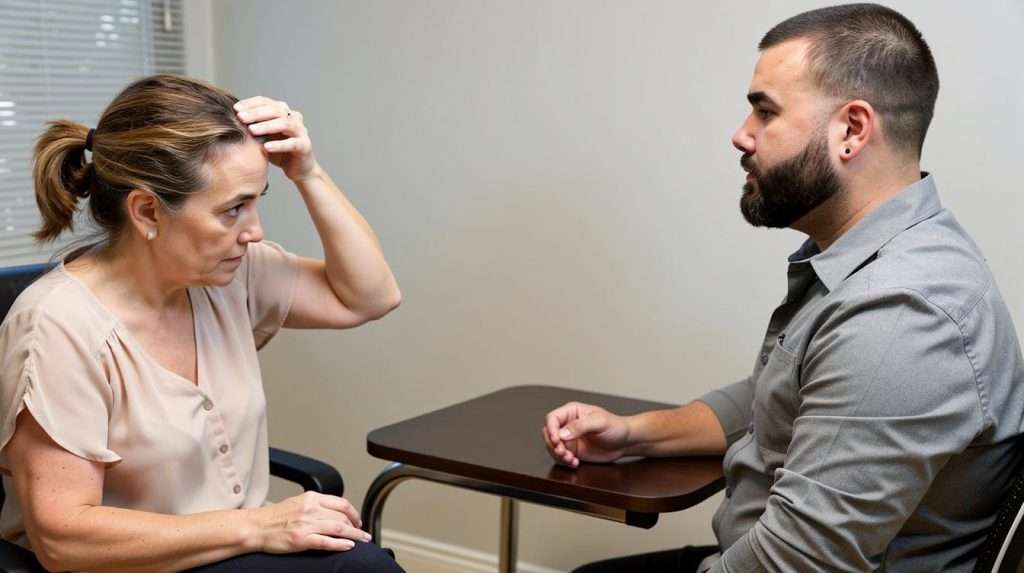
A consultation for permanent eyebrows is not simply an opportunity for the practitioner to look at your face. It is a two-way conversation in which your health history, skin type, lifestyle, and expectations all play a part.
You should leave the consultation knowing whether your skin type suits the technique, whether any medications or health factors need to be addressed, what the healed result realistically looks like for someone with your skin, and what the top-up schedule involves. Colour settling takes four to six weeks after the initial session, and some lightening of 30 to 50 per cent during healing is completely normal. That is not the procedure failing; it is the process working as expected.
The goal of the consultation is not to screen you out. It is to ensure that if you proceed, the result is one that can be approached with confidence. If something in your history means it would be better to wait, or to seek medical advice first, that is the consultation doing its job properly.
Rather than attempting to self-diagnose eligibility from a checklist, bring your questions, your medication list, and any skin or health history that feels relevant. That is how you leave a consultation with genuine clarity rather than an educated guess.
Frequently Asked Questions
Can I get combo brows if I have oily skin?
Yes, oily skin is often better suited to combo brows than to pure hairstroke techniques. The shaded component retains pigment more reliably on oilier skin, compensating for any softening of the hairstrokes over time. Results may require slightly more frequent top-ups, but combo brows remain a strong option for this skin type.
What medications stop you from being a candidate for combo brows?
Blood thinners, high-dose aspirin, and isotretinoin (Accutane) are the most common contraindications. Topical retinoids used near the brow area should also be disclosed. Most practitioners require clients to be off isotretinoin for at least 12 months before any permanent makeup procedure. Always share your full medication list at consultation.
Does age affect whether combo brows are suitable for me?
Age alone does not disqualify you from combo brows or other permanent eyebrow procedures. What matters is skin elasticity and condition. Mature skin that is thinner or less elastic can still be treated successfully, but it requires careful assessment and a practitioner who adjusts their technique accordingly.
How long do I need to wait after stopping Accutane before getting combo brows?
Most permanent makeup practitioners require a minimum of 12 months after your last dose of isotretinoin (Accutane or any derivative). The medication significantly affects skin healing and pigment retention, making any permanent makeup procedure inadvisable until the skin has fully recovered and stabilised.
What should I bring to a combo brows consultation to make it worthwhile?
Bring a list of any current medications, including topical products you use near your brows, and be prepared to share any relevant skin or health history. Reference photos of healed results you like are also useful. A thorough consultation should answer all your questions and provide realistic, specific expectations before you commit.