You’ve seen the before and after photos and you’re wondering if your own thinning patch is the right shape, or the wrong one, for this to work. Some hair loss patterns respond brilliantly to male density SMP. Others need a different approach entirely, and knowing which camp you’re in before you book a consultation saves you time and disappointment.
The honest answer to who is a good candidate for male density SMP is this: men with diffuse thinning, early to mid stage pattern baldness, or a scalp that still has a reasonable spread of existing hair across it. The pigment works by filling in the gaps between your remaining hair, so it needs something to blend with. Below are the five checks run through with every client before talking about sessions or pricing, because getting this right matters more than anything else in the process.
1. You still have hair, it’s just thinning out
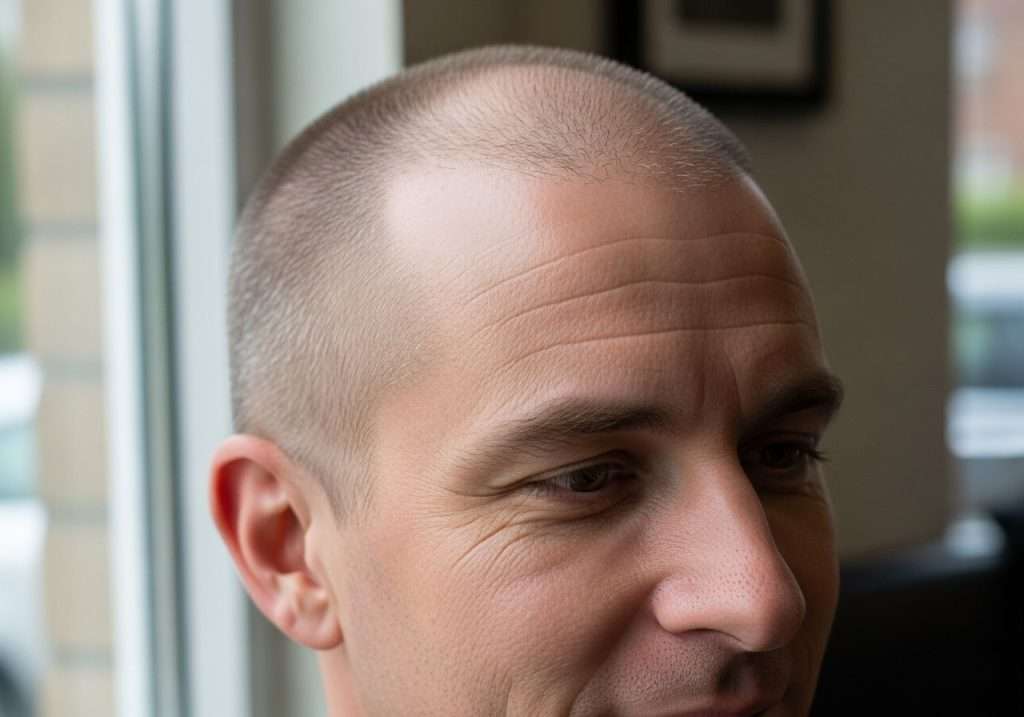
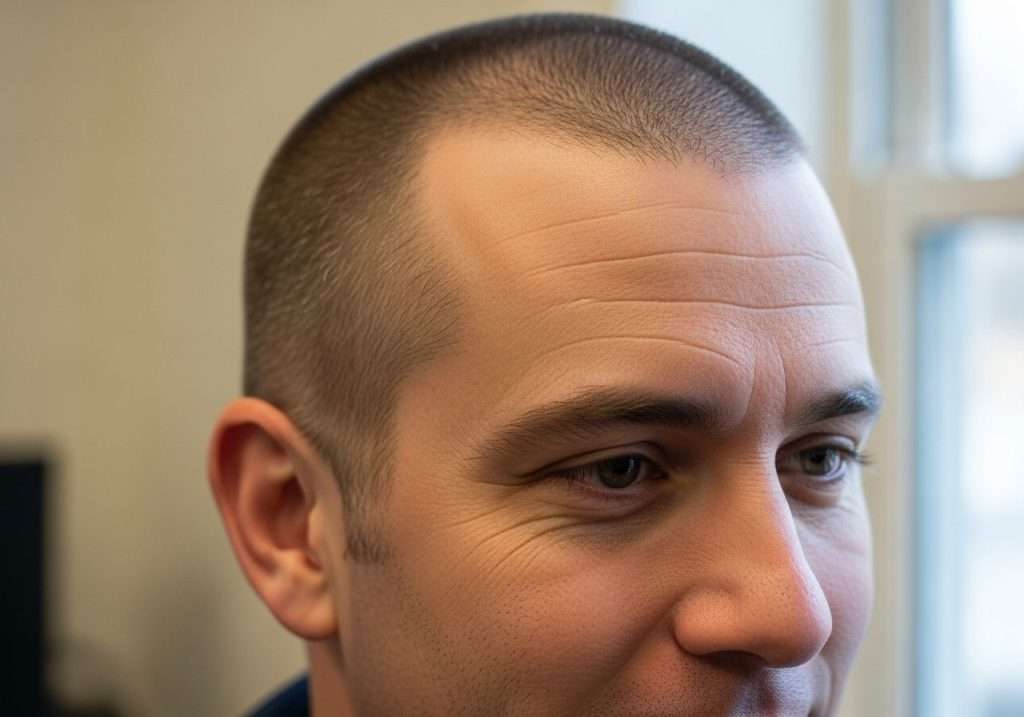
Male density SMP is built for exactly this scenario. If your hair is spreading thin across the crown, temples or mid-scalp but hasn’t disappeared completely, the pigment dots sit between your existing strands and reduce the scalp-to-hair contrast that makes thinning so visible under lights.
This is different from a full shaved head look, which uses denser, more uniform stippling because there’s no natural hair to blend with. Density work is more of a camouflage job: pigment tone and dot placement are matched to what’s already growing, so the two read as one.
Men in the early stages of male pattern baldness, driven by DHT shortening the hair growth cycle, are often the best fit. Catching it here, rather than waiting until the scalp is fully visible, tends to give the most natural-looking result.
2. Your alopecia areata is stable, not active
This is the point practitioners are strictest about. Active alopecia areata, where patches of hair loss are still appearing or changing, is not a good time for SMP. The immune process driving the shedding is unpredictable, and pigmenting a scalp that’s still losing hair means you could end up chasing new patches for years.
Once the condition has been stable for a meaningful stretch of time, confirmed by a dermatologist rather than a guess, it’s a different conversation. Stable alopecia areata and alopecia totalis are both included in who benefits from SMP. Active, progressing alopecia is not, at least not yet.
3. Your scalp skin is calm, not inflamed
Skin condition matters as much as hair pattern. Active psoriasis flare-ups, eczema outbreaks, or scalp acne are all reasons to pause. Depositing pigment into inflamed or broken skin risks poor pigment retention, uneven healing, and irritation that’s simply not worth it when the flare could settle in a few weeks anyway.
Keloid-prone skin is a separate concern. If you scar heavily or raised from minor cuts or piercings, that same tendency can affect how pigment settles and heals in the scalp. It’s worth flagging this history honestly in your consultation rather than hoping it won’t come up.
Calm, non-inflamed skin isn’t a bonus, it’s a requirement. It’s the single biggest factor in whether pigment heals cleanly and holds its shape over the years that follow.
4. You understand this is camouflage, not regrowth
SMP does not regrow hair. It doesn’t wake up dormant follicles or slow down further loss. What it does is use medical grade pigment, deposited at a shallow depth into the scalp, to visually recreate the look of density and shorter, cropped hair.
Men who go in expecting thicker, longer hair to sprout are setting themselves up to feel let down by a result that’s actually working exactly as intended. The men who are happiest with their outcome are the ones who understood, going in, that they’re buying a visual effect, not a biological one. That mindset shift matters more than almost any technical factor.
5. You’re not expecting a one-and-done fix
Good candidates also understand the maintenance rhythm. Male density SMP typically takes two to four sessions, spaced a few weeks apart, before the final density is built up. Results generally last four to eight years before a touch-up is needed to refresh fading pigment, with many men returning roughly every four to six years.
If you’re hoping for a single appointment that never needs revisiting, recalibrate that expectation now. If you’re comfortable with periodic touch-ups the way you’d budget for any long-term grooming routine, you’re thinking about this the right way.
Self-qualifying against these five points before you book gives you a realistic picture of what to expect. Where things are genuinely unclear, particularly around active skin conditions or unstable alopecia, a proper consultation and, where relevant, a dermatologist’s input, is the next right step rather than the treatment itself.
Frequently Asked Questions
Who is a good candidate for male density SMP?
Men with diffuse thinning or early to mid stage pattern hair loss who still have hair across the scalp are the best candidates. Stable skin, no active flare-ups, and realistic expectations about camouflage rather than regrowth are equally important factors in a good outcome.
What are the main SMP density contraindications for men?
Active alopecia areata, unmanaged psoriasis or eczema flare-ups, active scalp acne, and keloid-prone skin are the main contraindications. These conditions can affect pigment retention and healing, so most practitioners recommend waiting until the scalp is stable before treatment.
When is scalp micropigmentation not suitable for someone?
Scalp micropigmentation isn’t suitable when hair loss is still actively progressing, such as unstable alopecia areata, or when the scalp has current inflammation, infection, or a strong history of keloid scarring. It’s also unsuitable for anyone expecting actual hair regrowth.
Does male density SMP work on very advanced baldness?
It can, but the approach changes. Advanced baldness with little to no remaining hair typically uses a denser, more uniform pigmentation pattern rather than the blended density technique used for diffuse thinning, so the visual goal shifts from camouflage to a fuller shaved head effect.
How long does male density SMP last before it needs a touch-up?
Results typically last four to eight years before noticeable fading occurs, with many men scheduling a touch-up every four to six years. Sun exposure, skin type, and cell turnover all affect how quickly pigment softens over that time.